



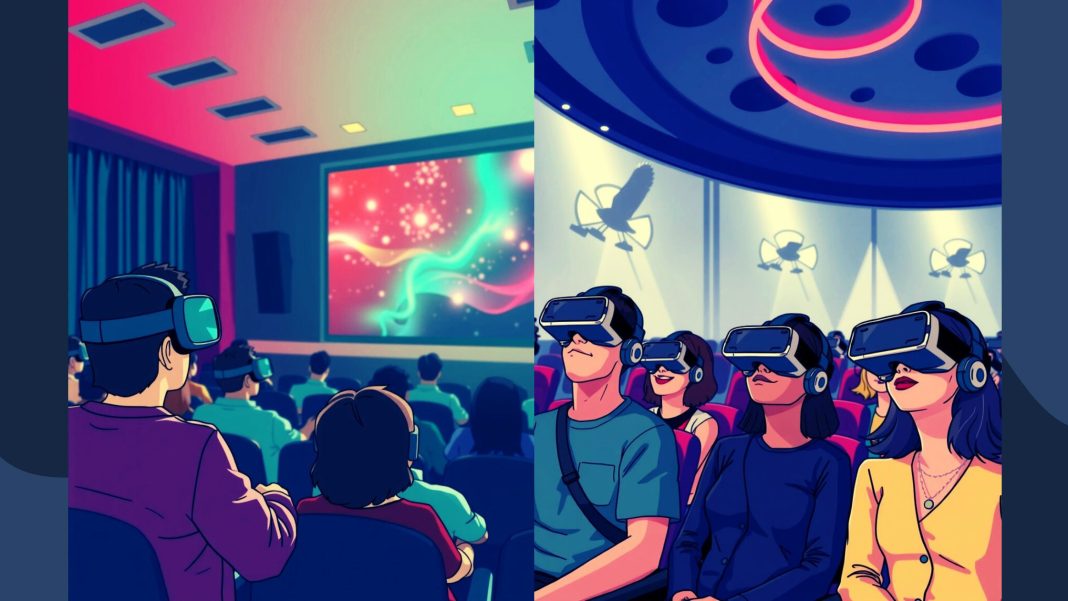
Discover the future of film as we unveil how 3D and immersive technologies are set to revolutionize the movie-watching experience. Learn how audience engagement, enhanced storytelling, and personalization will elevate cinema to astonishing new heights. We will discuss the predictions about the transformative potential of interactive movie technologies.
Audience Participation Will Transform Movie Experiences
While I’m not in the movie business, I’ve already pioneered 3D immersive keynote presentations in the rather traditional world of conferences. If this technology can transform how professionals learn and engage, imagine what it can do for movies. So, I thought I’d chime in. The biggest shift? Audience participation. Instead of passively watching a film, audiences will step inside and even co-create it.
For example, in my immersive presentations, I don’t just talk about how the brain processes decisions—I take audiences inside a 3D-rendered brain, showing them exactly which areas are engaged during a client’s decision-making process. When explaining perception, I don’t just discuss how visual appearance influences trust—I demonstrate it in real-time by changing my 3D avatar’s clothing or even altering my own voice live on stage to demonstrate the impact of different communication styles.
Now, imagine applying that to film. Instead of just watching a high-speed chase, you’re inside the car, feeling the engine’s rumble and the adrenaline rush of weaving through traffic. For me, the next step in my keynotes is allowing audiences to interact with my content in real time-whether through their mobile devices, VR, or AR, customizing the experience for their needs. For movies, this means that viewers won’t just consume a story—they’ll shape it. They could alter plot aspects, engage with characters, or even shift perspectives within the film. The fourth wall? It won’t just be broken—it will disappear entirely.
Of course, this also marks a new frontier for storytelling. In my experience, bringing the technology to life on stage was one challenge—but rethinking how to tell my keynote story within this new medium was entirely different. It wasn’t just about adding 3D effects; it required reimagining the entire narrative and structuring it to leverage the immersive experience fully. How will filmmakers craft narratives when the audience becomes part of the experience? How will they balance creative control with interactive elements?


Sylvie Di Giusto, Keynote Speaker, Sylvie Di Giusto
3D Tech Enhances Storytelling And Emotional Connection
One significant way 3D and technology will shape the future of movie-going is through a deeper audience. The technology already enhances storytelling by pulling viewers into the world on screen. For example, blockbuster films like “Avatar” and “Guardians of the Galaxy” showed how 3D visuals can make imaginary worlds feel incredibly real. Immersive experiences foster emotional connections, which audiences will continue to demand.
The film industry is tapping into advancements like augmented reality (AR) and virtual reality (VR). These technologies can create interactive pre-shows or extend the movie experience beyond the theater. For example, imagine being able to step into a film’s setting through a VR headset right after watching the trailer. This kind of innovation will keep audiences excited about going to the movies.
A critical takeaway is that technology needs to balance innovation with accessibility. The growing popularity of 3D films in international markets, like China, proves that people are drawn to immersive experiences. Yet, it’s essential to keep costs reasonable and ensure broad access to these innovations. Whether it’s a local cinema or an IMAX theater, the goal should be to deliver stunning, memorable experiences that feel worth every penny. Making innovation user-friendly always leads to greater success.


Konrad Martin, CEO, Tech Advisors
Immersive Tech Makes Cinema Interactive And Personalized
Immersive technology will revolutionize movie-going by transforming passive viewing into interactive experiences. Innovations like VR and AR will enable audiences to engage with films in dynamic, personalized ways, blurring the line between storytelling and participation. For example, VR theaters could allow viewers to explore scenes from different perspectives, enhancing emotional investment. This shift will redefine entertainment, making cinema more experiential and engaging, attracting new audiences while elevating storytelling beyond the traditional screen.


Brenton Thomas, Founder, Twibi
Interactivity Elevates Movie-Going To New Levels
One significant way 3D and immersive tech will impact movie-going is by making the experience feel way more interactive and personal. Instead of just watching a movie, audiences will feel like they’re in it, with immersive storytelling that pulls them into the world like never before. Imagine moving around within the scenes, interacting with characters, or changing the storyline based on your choices. It’s not just about looking at a screen—it’s about creating a truly unforgettable experience. This kind of tech will take movie watching to a whole new level, making it way more engaging and interactive for the audience.

Justin Belmont, Founder & CEO, Prose
Wrapping Up
I see 3D and immersive technology redefining how we experience movies, turning passive viewing into deeply interactive and engaging. With virtual reality (VR), augmented reality (AR), and high-frame-rate 3D advancements, we’re on the brink of a cinematic revolution where audiences won’t just watch stories—they’ll step inside them. These innovations aren’t just about visual spectacle; they’re about deeper emotional connections, more dynamic storytelling, and an entirely new way to interact with narratives. Hollywood and independent filmmakers are experimenting with these tools, pushing the boundaries of what’s possible on screen—and beyond it.
Looking ahead, the cinema industry will likely blend traditional storytelling with cutting-edge immersion, allowing us to experience films in ways we’ve only imagined. Whether exploring a scene from the perspective of different characters, feeling the intensity of action sequences as if we’re inside them, or even influencing a story’s outcome through interactive choices, immersive technology will give audiences unprecedented experiences. Of course, challenges remain—cost, accessibility, and the need for compelling content—but the trajectory is clear. The way we consume films is evolving, and as these technologies mature, we’re not just going to watch movies—we’re going to live them.


