The health challenges of the 21st century necessitate an entirely new approach to biomedical research and healthcare. We must rethink what biomedical research and healthcare should offer to address health systems’ worldwide demands. It is all about using emerging innovations to improve biomedical research and healthcare services so people can live healthier, more productive, and more satisfying lives.
Every year, we spend more than $7 trillion on healthcare worldwide, but only a tiny portion of that money is spent using emerging technologies to improve healthcare services. Technology is probably the most critical way to change scientific research and health care if used correctly and for exemplary purposes.
Biomedical Research And Complexity Of Diseases
The biomedical research arena has evolved in tandem with the complexity of diseases; however, it remains to be seen if this evolution is accurately reminiscent at the molecular level. This connection has been explicitly witnessed in chronic diseases, where frightening morbidity necessitates the progression of research for better diagnosis and prognosis.
One such improvisation has been in the form of precision medicine. Guided by dissecting the molecular details of the disease, precision medicine has witnessed considerable success. Taking the precision medicine technicality to the clinic is advantageous, as it helps to accurately predict which treatment regimen will work best for the patient; it is also replete with significant pitfalls, including a vast amount of multidimensional data and a lack of specialists.
Further, this approach limits the therapeutic to only those well-characterized molecular changes, leaving those that are not and hence manifest insufficiency in the treatment. This calls for improvising data analysis in targeted therapy through a system that can read multidimensional data and make meaningful conclusions with high predictive value.
Utilizing Artificial Intelligence And Machine Learning
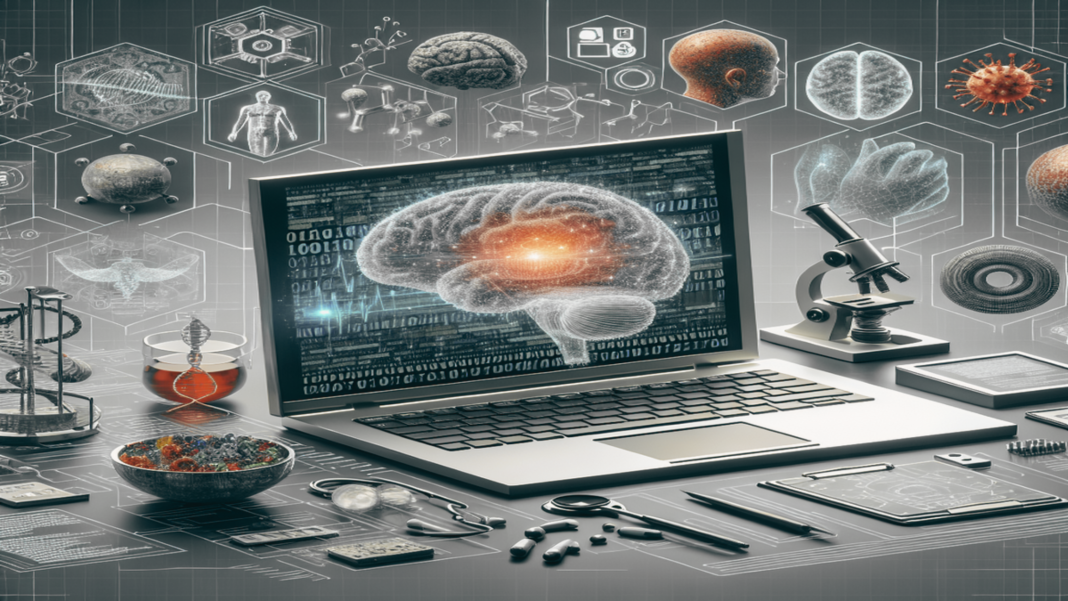
One of the conceivable systems for attaining this feat could be through Artificial Intelligence (AI) and machine learning (ML), which utilizes high-performance computing (HPC) and intelligent algorithms that are trained using vast amounts of sequencing and digital imaging data to make accurate conclusions about diagnosis, prognosis, and treatment response. AI algorithms can process digital medical images and identify regions of interest (ROI) in seconds with high accuracy and precision. Besides, AI algorithms can analyze the bulk of multi-omics data from the tumor and identify the markers of interest with the best available therapy.
Using AI to perceive the data can also help generate combinations of mutations and other molecular changes in the patient’s data and check for their relative significance regarding the tumor’s aggressiveness or drug development. AI/ML could also predict future genomic mutations/transcriptomic variations based on the pre-trained data.
Functionally, pre-training the AI algorithm would provide outcomes related to already-known information to sketch out the pattern of how cancer should play out. AI/ML can significantly reshape the treatment strategy by forecasting the mutations that could ensue. Through combinations, AI/ML could help refocus precision medicine on targets guided by prognostic value and not by the silent identity of having an approved drug. Even if this approach cannot yield the exact drugs for the newly discovered mutations or combinations, it contributes to developing drugs toward a more rational target, highlighting the contextual importance of mutations concerning cancers.
Additionally, AI/ML could help deal with the changing landscape of mutations, providing a new avenue for stage-specific, broad-based therapy. This could make treatment more suited to the cancer stage, guided by how the repertoire of genetic alterations changes as cancer evolves.
As a result, AI/ML can significantly enhance the clinician’s analysis by providing a panoramic view of the molecular data obtained from the patient’s tumor, with far-reaching implications such as real-time analysis of the patient’s tumor to determine malignant potential by explicitly quantifying the population of drug-resistant cancer stem cells and estimating their cytological fate in proportional with changes in the tumor microenvironment imposed by treatment with drugs and small molecule inhibitors.
Conclusion
Other researchers and we do not expect AI/ML to replace doctors, radiologists, or pathologists; instead, it is a tremendously powerful tool that should be readily accessible to assist them in detecting high-risk cases and making decisions. Improved clinical practices and the introduction of smart technologies with the potential to transform services can better support people to lead healthy, active, and fulfilling lives.