



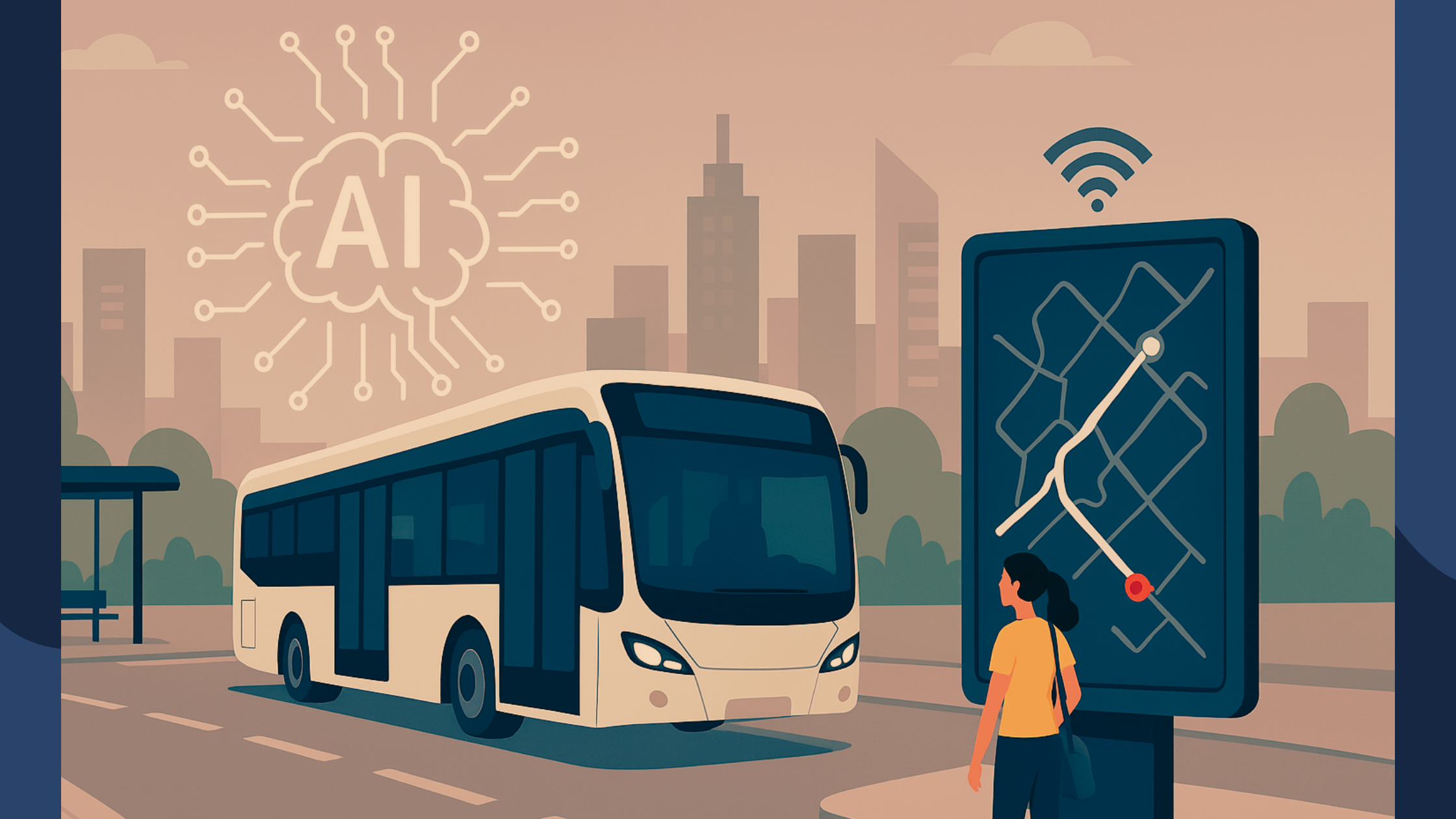
AI is revolutionizing public transportation, offering solutions for real-time route adjustments and improved efficiency. This article presents how artificial intelligence transforms transit systems worldwide. Discover how AI makes public transportation more reliable and flexible, from optimizing routes to responding to emergencies.
AI Optimizes Routes For Efficient Public Transit
We’ve seen firsthand how real-time route adjustments can drastically reduce logistics delays. The U.S. Department of Transportation reports that 15% of bus delays are caused by traffic congestion that AI could predict and mitigate. For instance, AI-powered routing platforms can analyze live traffic data and dynamically redirect vehicles to optimize arrival times. In logistics, this approach reduced average delivery delays by over 20%, and public transit agencies could see similar gains by integrating predictive AI models.
Treating AI as a decision-making partner rather than a simple tool is key. Agencies must combine historical ridership patterns with real-time conditions to reroute vehicles, adjust schedules, and even forecast demand spikes. Applying these principles in the moving industry allowed our drivers to avoid bottlenecks and complete more timely moves, boosting efficiency and customer satisfaction. Public transit can benefit in precisely the same way, making travel faster and more reliable for millions of riders.


Bretton Auerbach, CEO, LocalMovers
Dynamic Rerouting Enhances Transportation Flexibility
AI can make public transportation more efficient by dynamically shifting routes and schedules rather than relying on fixed timetables. Real-time data from GPS tracking, passenger counts, and traffic conditions allows systems to respond instantly to bottlenecks that would otherwise cause widespread delays. For example, suppose an unexpected accident slows traffic along a central corridor.
In that case, an AI platform can reroute certain buses onto parallel streets and communicate those changes directly to riders through mobile alerts. At the same time, it can redeploy additional vehicles to high-demand stops where passengers might be stranded. Instead of delays cascading across the network, the system adapts on the spot, keeping service reliable. This flexibility demonstrates how AI can shift transportation from rigid scheduling to responsive mobility.

Ydette Macaraeg, Marketing Coordinator, Santa Cruz Properties
Helsinki’s AI System Adapts To Real-Time Disruptions
AI can revolutionize public transportation by optimizing routes, predicting maintenance needs, and managing real-time disruptions. These systems analyze traffic patterns, passenger demand, and unexpected events to keep transit running smoothly. A great example is Helsinki’s HSL Reittiopas system in Finland. When disruptions like road closures or accidents occur, they recently introduced a “Journey Planner” system launched in April 2025.
It recalculates optimal bus routes and updates digital displays throughout the city and passenger congestion levels in real time. It notifies drivers of new directions and alerts passengers’ mobile apps about delays or alternative routes. This real-time adjustment capability allows buses to avoid traffic jams and construction zones automatically. Instead of passengers waiting at stops for delayed buses, they receive updated arrival times and can plan accordingly.
The system also helps transit authorities redistribute vehicles to high-demand areas during peak hours. Beyond route optimization, AI helps predict when buses and trains need maintenance before breakdowns occur. This prevents service interruptions and reduces costly emergency repairs. Smart scheduling algorithms also ensure adequate coverage during events or weather changes. The result is more reliable, efficient public transportation that adapts to a city’s changing daily conditions.

Steve Dempsey, Principal, NeoTech Networks LLC
Data-Driven Flexibility Improves Transit Reliability
AI can dynamically analyze live traffic, rider demand, and weather conditions to adjust bus or shuttle schedules. For example, in a city where morning congestion regularly delays routes, AI could redirect certain buses onto less crowded streets and send additional vehicles to stops experiencing higher passenger volume. This reduces wait times and balances capacity without requiring more staff. The same principle applied in healthcare logistics has shown how responsive routing improves reliability, suggesting that transit systems could achieve similar gains by shifting from fixed timetables to data-driven flexibility.

Wayne Lowry, Founder, Best DPC
AI Responds To Emergencies, Preventing Service Failures
AI can also be utilized during emergency periods or unforeseen interruptions. Real-time systems can sense accidents, roadwork, or road closures and automatically suggest alternative routes for buses or trains. For instance, in an accident that shuts down a busy downtown street during rush hour, AI can divert cars to nearby streets and notify passengers in real-time via electronic displays and smartphone apps. This limits cascading delays that tend to spread throughout the system. By responding quickly to unexpected changes, AI prevents service failures and integrates resilience into the public transportation system, making it more robust in real-world conditions.

Evan Shelley, Co-Founder & CEO, Truck Parking Club


