

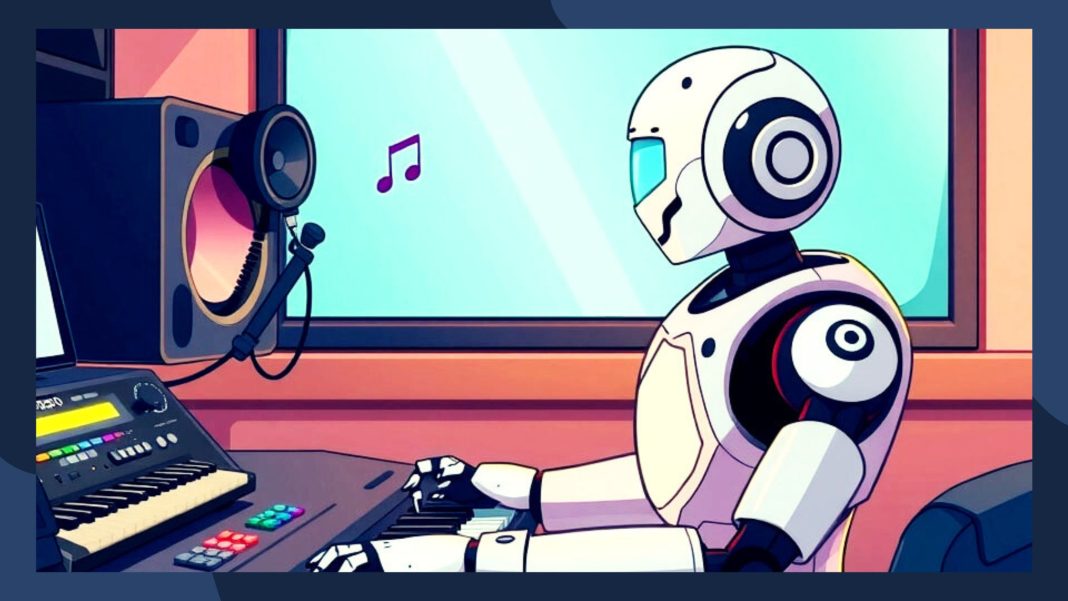
As we reveal the details, artificial intelligence is revolutionizing the world of music composition and production. AI’s impact on music is profound. Find out the five ways these advanced technologies are transforming the creative process and democratizing music creation for artists around the globe.
1. Enhances Musical Creativity
AI is really changing how music is composed and produced, and I’ve experienced that firsthand through my music persona, Candace Love. I know some musicians might feel a little threatened by AI—like it will take over the creative process—but honestly, I see it as a tool that can enhance creativity rather than replace it.
It reminds me a lot of when computers first came on the scene. I’ve been around long enough to remember the outcry from many writers who were used to their trusty manual typewriters. People said, “I’ll never write on a computer—it’s not the same; it has no soul!” But fast-forward to today, and honestly, I don’t know anyone who’s still using a manual typewriter. We adapt, grow, and learn how to use new tools to make our work better, faster, and sometimes even more inspired.
That’s how I see AI in music. When I write songs like Candace Love, sometimes I’ll use AI to spark an idea—maybe a melody, a chord progression, or a lyric that makes me think in a new way. But at the end of the day, my voice, story, and emotions still shape the final song. AI gives me another way to access the muse—it’s like having a creative buddy who’s always there to brainstorm.
And really, humans have always used tools to create art. Nobody tells a painter they shouldn’t use a new kind of brush or a different kind of paint. Why shouldn’t musicians and songwriters use every tool available to help express what’s in their hearts? I also think AI is helping to democratize music—you no longer have to be a classically trained musician or have access to a big fancy studio. If you’ve got something to say and a bit of curiosity, AI can help you say it in a beautiful and compelling way.
To me, AI is part of the evolution of music and creativity. It’s like the next step in how humans express themselves, and if we embrace it rather than fear it, I think it can lead to some really incredible, heartfelt art.

Patty Mooney, Producer, Editor, Content Creator, New & Unique Videos
2. Democratizes Music Creation
We’ve noticed a growing trend among our customers who request assistance with music generated by AI. This indicates that there are musicians out there who, while they can play and read sheet music, may not feel confident in their songwriting or composing abilities. However, they can articulate their broad musical ideas well enough for AI tools to generate songs that resonate with them.
This shift democratizes music creation and opens up new avenues for collaboration between human musicians and AI technology. Importantly, the creative process doesn’t end with the song’s composition—it continues right through to the performance (and possibly even the listening, though that’s a discussion for another day!). If these musicians perform live, even if AI originally wrote the music, there is still room for human expression.

Sam James, Transcriber & Owner, Tunescribers
3. Transforms Creative Process
AI is showing the first steps of creativity. However, the current generative AI can only decompose and recompile styles from human-created pictures, lacking the ability to create entirely new styles that have never existed before. Removing a particular style from the training data will prevent the system from inventing it. Nevertheless, AI generative algorithms are transforming the creative process in art and music, much like how Photoshop and Illustrator transformed digital art.
These instruments are high-level tools that are not limited to working with pixels. Future digital artists will have access to much higher concepts like image style and scene text description, democratizing the way of creating art and music. However, this progress brings threats, such as the rise of fake videos and clone voices. Regulating these issues and ensuring copyrights for artists’ styles will be challenging. Artists spend significant amounts of time developing their styles; it’s their intellectual property.

Aleksey Pshenichniy, Chief R&D Officer, Elai.io
4. Streamlines Music Production
AI fundamentally changes music composition and production by streamlining the creative process and expanding artistic possibilities. One of the biggest shifts is how AI-powered tools assist musicians in generating melodies, harmonies, and even entire compositions in seconds—allowing artists to experiment faster and push creative boundaries.
For example, AI-driven platforms like AIVA and Amper Music help composers create orchestral scores or background music with minimal input, making high-quality production more accessible to independent artists and filmmakers. Similarly, machine learning algorithms in DAWs (like Ableton Live’s AI-powered features) can suggest chord progressions, auto-generate beats, or even replicate a specific producer’s style, reducing creative roadblocks.
Beyond composition, AI is also transforming audio mastering and sound design. Services like LANDR use AI to automate professional-quality mastering, giving indie artists a polished sound without expensive studio sessions. AI-driven plugins analyze mixes in real time, optimizing EQ and compression to match industry standards. The most exciting part? AI isn’t replacing human creativity—it’s acting as a collaborative tool, enhancing efficiency while still allowing artists to express their unique expression. The future of music will likely be a blend of human emotion and AI-driven innovation.

Patric Edwards, Founder & Principal Software Architect, Cirrus Bridge
5. Generates Full Compositions Quickly
One way AI is changing music composition and production is through generative AI tools that can create full compositions in seconds. This is a major shift from traditional methods, where musicians spend hours developing melodies and refining arrangements. Platforms like Google’s MusicLM and Meta’s MusicGen allow artists to generate new pieces from simple text descriptions. This makes it easier for musicians to experiment with different styles but also raises concerns about originality and creative control.
I’ve seen firsthand how AI-driven content creation has reshaped industries. In IT, automation has helped businesses streamline operations, but it always comes with trade-offs. The same applies to music. AI-generated tracks flood streaming platforms, making it harder for new artists to stand out. Personalized algorithms on services like Spotify and Apple Music decide what people hear, often favoring AI-assisted music over human-made compositions. While this technology offers convenience, it challenges artists trying to connect with listeners organically.
Musicians who embrace AI as a tool rather than a replacement can benefit the most. AI can help brainstorm new ideas, refine sound quality, and create background music for content creators. But it’s important to maintain human creativity in the process. Artists should experiment with AI but still bring their personal touch to their music. The key is to use AI to enhance, not replace, human artistry.

Elmo Taddeo, CEO, Parachute
AI’s influence on music composition and production has dramatically reshaped how we create and experience music. AI offers unprecedented opportunities to experiment with sound, structure, and style. The integration of machine learning models allows for enhanced collaboration between humans and technology, transforming once manual tasks into automated, efficient processes. I know how AI-driven software can generate compositions, adjust mixes, and even provide real-time feedback to music producers, revolutionizing the workflow in studios.
However, it’s vital to approach AI’s involvement in music with a balanced point of view. While AI can assist in creativity, it cannot fully replace the unique human touch that drives music’s emotional depth. Music will likely be a fusion of AI and human artistry, where technology acts as a partner rather than a replacement. Musicians and producers must embrace AI’s possibilities while maintaining the authenticity and soul that makes music resonate with listeners.


