



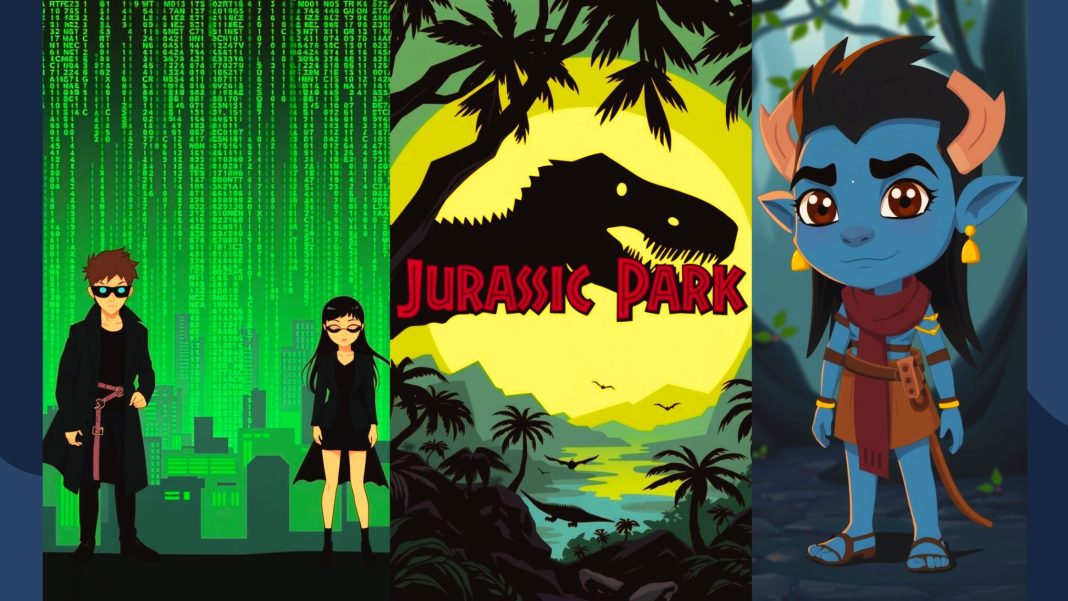
I’ve always believed that storytelling is at the heart of filmmaking. It draws us in, makes us believe in impossible worlds, and connects us to characters that might not even be real. But the way we tell those stories has changed dramatically over the years. One of the biggest game-changers? Computer-generated imagery, or CGI. It’s not just a tool—it’s a revolution that has reshaped the entire industry.
I remember when practical effects were the backbone of visual storytelling. Films relied on miniatures, prosthetics, and animatronics to bring the extraordinary to life. Don’t get me wrong—those techniques are still impressive, and some filmmakers use them beautifully. But CGI has taken things to a whole new level. Suddenly, directors and visual artists weren’t limited by physical constraints. They could create entire galaxies, resurrect long-gone actors, or craft creatures that defy the laws of physics while making it look seamless.
Think about the first time you saw a movie that made you question what was real and what was CGI. For me, it was Jurassic Park in 1993. Seeing a towering T. Rex come to life on screen was breathtaking. That film marked a turning point, proving that CGI could blend seamlessly with live action and enhance—not replace—traditional filmmaking. Since then, we’ve seen jaw-dropping advancements, from the hyper-realistic de-aging in The Irishman to the fully digital worlds of Avatar.
But CGI isn’t just about spectacle; it’s about storytelling. It allows filmmakers to bring their wildest visions to life, expanding the scope of what’s possible. We can now tell stories that were once deemed too ambitious or impractical. Whether it’s the sweeping battle scenes in The Lord of the Rings or the mind-bending landscapes of Doctor Strange, CGI has given us a new cinematic language—one that continues to evolve every year.
Of course, like any technological leap, CGI comes with its challenges and criticisms. Some argue it’s overused or can make films feel artificial when done poorly. But at its best, CGI can help enhance the story, not vice versa. I can’t help but wonder. Will we reach a point where CGI is indistinguishable from reality? One thing’s for sure: the revolution isn’t over yet.
The cinema industry is witnessing a revolution courtesy of CGI, transforming storytelling enriched with additional insights from leading industry experts. Discover how creations like “Avatar” have redefined what’s possible, setting new benchmarks for immersive cinematic worlds.
Evolution Of CGI
I’ve always been fascinated by how filmmakers bring the impossible to life. Before CGI took over, Hollywood relied on practical effects—miniatures, matte paintings, animatronics, and prosthetics—to create movie magic. Growing up, I watched films like Star Wars (1977) and The Thing (1982), where every explosion, creature, and alien world was built by hand. It took teams of artists, engineers, and puppeteers to craft these illusions, and there was something special about their tangible, physical presence on screen.
But as groundbreaking as the practical effects were, they had limitations. Miniatures could only be so detailed; mechanics restricted animatronics, and stop-motion—while charming—couldn’t consistently achieve the realism filmmakers envisioned. That’s where CGI started to change the game. I remember when Tron (1982) came out—it wasn’t perfect, but it was a glimpse into the future. Then came The Abyss (1989), which introduced the first photorealistic CGI character: the water tentacle. That single scene proved CGI could do things practical effects never could.
The real turning point, though, was Jurassic Park (1993). I’ll never forget seeing the T. Rex step out in the rain—my jaw hit the floor. Steven Spielberg and his team combined animatronics and CGI, blending them so seamlessly that audiences couldn’t tell where one ended and the other began. That film set the stage for CGI’s dominance in Hollywood, showing that digital effects weren’t just a novelty; they were the future.
From there, CGI took off. The Matrix (1999) wowed us with bullet-time effects, The Lord of the Rings trilogy (2001-2003) gave us Gollum—one of the first fully realized CGI characters—and Avatar (2009) transported us to Pandora, proving that entire worlds could be built digitally. Today, CGI is everywhere, from subtle enhancements to full-blown virtual productions like The Mandalorian, where entire environments are projected on massive LED screens instead of being physically built.
However, as much as CGI has evolved, the best filmmakers still understand that digital magic works best when balanced with practical effects. Mad Max: Fury Road (2015) and The Dark Knight (2008) still feel so visceral—they mix real stunts with digital enhancements. The key isn’t replacing practical effects but using CGI to push boundaries while maintaining the authenticity that made audiences fall in love with movies in the first place. And with AI-driven effects and real-time rendering on the rise, we’re only scratching the surface of what’s possible.
CGI In World-Building
When I think about the power of cinema, I think about its ability to transport us—to take us somewhere we’ve never been before. Whether it’s the neon-drenched cyberpunk streets of Blade Runner 2049 or Avatar’s vast, otherworldly landscapes, world-building is one of the most immersive aspects of storytelling. And in today’s filmmaking, no tool has expanded the limits of world-building more than CGI.
I remember when filmmakers had to rely almost entirely on physical sets, matte paintings, and miniatures to create fantastical worlds. Don’t get me wrong—those techniques were brilliant and still have their place. But they also came with limitations. You had to find a real-world stand-in or build something from scratch to depict a sprawling alien metropolis or a post-apocalyptic wasteland. That meant compromises—restricted camera movements, budget constraints, and a reliance on the audience’s imagination to fill in the gaps. CGI changed all that.
With CGI, filmmakers can create environments as real as any physical set. Look at The Lord of the Rings trilogy—Peter Jackson used CGI to bring Middle-earth to life, from the rolling hills of the Shire to the volcanic horrors of Mount Doom. Without CGI, we wouldn’t have the sweeping aerial shots of Minas Tirith or the massive battle sequences in The Return of the King. The technology allowed Jackson to build a world that felt lived-in, detailed, and—most importantly—believable.
But CGI isn’t just about making things look cool—it’s about expanding storytelling possibilities. Take Inception (2010), for example. Christopher Nolan used CGI to bend cityscapes, fold streets onto themselves, and create gravity-defying dream worlds. The film’s story required environments that couldn’t exist in reality, and CGI provided a way to visualize them without breaking the illusion.
Then there’s Dune (2021), a film that perfectly showcases how CGI can enhance world-building. Instead of relying entirely on green screens, Denis Villeneuve combined practical locations with CGI enhancements to make Arrakis feel tangible. The result? A world that feels both alien and grounded—a place you believe could exist.
What excites me most about CGI’s role in world-building is that we’re only scratching the surface. With real-time rendering engines like Unreal Engine and advancements in AI-driven effects, filmmakers can now visualize entire digital worlds in pre-production, fine-tuning details before a single frame is shot. We’re entering an era where virtual production isn’t just an option—it’s becoming the norm.
CGI Creates Realistic Worlds
CGI changed storytelling by letting films show worlds that physical sets could not create. For example, a movie used digital effects to depict a city that felt real and full of life. The visuals pulled viewers into the narrative and deepened their connection with the characters. My work in content creation taught me that audiences react to explicit, dynamic imagery. Digital effects in movies open up creative paths and simplify complex ideas. Embracing CGI can help filmmakers deliver messages that hit home with viewers and bring stories to life.


Natalia Lavrenenko, UGC Manager/Marketing Manager, Rathly
Seamless CGI
One of the biggest challenges in modern filmmaking is finding the sweet spot between realism and fantasy when using CGI. I’ve seen films with flawless digital effects that blend perfectly with practical elements, making the world feel authentic. But I’ve also seen movies that rely so heavily on CGI that everything looks artificial, pulling me out of the story. The difference? It all comes down to how well the effects are integrated and whether they serve the storytelling rather than overpower it.
I’ve always believed that the best CGI is the kind you don’t consciously notice. Take The Dark Knight (2008), for example. Most people don’t realize how much CGI was used in that film because Christopher Nolan prioritized practical effects wherever possible. But when CGI was needed—like in the incredible truck flip sequence—it was used sparingly and blended seamlessly with real stunt work. That’s what makes it feel grounded and visceral. The same approach was used in Mad Max: Fury Road (2015), where director George Miller filmed actual vehicles and explosions but enhanced them with CGI to make the action even more dynamic without feeling fake.
On the other hand, we’ve all seen films where CGI becomes a crutch rather than a tool. When everything on screen is digital—from characters to environments—it can sometimes feel weightless, as if there’s no real-world anchor. This is why many audiences had issues with the overuse of CGI in The Hobbit trilogy compared to The Lord of the Rings. While Peter Jackson’s original trilogy balanced practical effects with CGI, The Hobbit leaned too heavily into digital creations, making the characters and landscapes feel less tangible.
What separates effective CGI from distracting CGI is attention to detail. Lighting, texture, and physics play a massive role in making digital elements feel real. One of the best examples of this is Blade Runner 2049 (2017). The film used CGI to extend its futuristic cityscapes, but it also incorporated real sets and lighting to keep everything feeling immersive. Even digital characters, like Joi (the AI companion), were carefully designed with naturalistic lighting interactions to ensure she didn’t look out of place in the live-action world.
Of course, there are times when CGI is meant to be otherworldly, and that’s where the balance between realism and fantasy becomes an art form. Doctor Strange (2016) is a great example. The film’s mind-bending visuals—buildings folding, gravity-defying fight sequences—are pure fantasy, yet they work because they follow consistent rules within the film’s universe. The key to making CGI believable isn’t just making it look real—it’s making it feel real within the story’s context.
Currently, filmmakers have more tools than ever to create seamless CGI. Real-time rendering, AI-assisted effects, and virtual production techniques are making it easier to blend digital and practical elements in ways we’ve never seen before. But at the end of the day, CGI is just a tool. The real magic happens when filmmakers use it wisely—enhancing the story without overwhelming it. That’s the true art of seamless CGI.
Avatar’s CGI Transforms Storytelling
One example of how CGI has positively transformed storytelling in film is in “Avatar” (2009). The groundbreaking use of CGI in creating Pandora’s vibrant, immersive world allowed filmmakers to tell a story that would have been impossible to achieve with traditional practical effects. The ability to create photorealistic environments, alien species, and intricate visual effects elevated the narrative, making it more immersive and emotionally impactful.
CGI also played a crucial role in bringing the characters to life, particularly with the motion capture technology used for characters like Neytiri. This allowed for nuanced performances that blended seamlessly with the fantastical world, creating a deep emotional connection between the audience and the characters. Ultimately, CGI in “Avatar” didn’t just enhance the visual experience; it expanded the boundaries of storytelling, enabling a more immersive and engaging narrative that resonated with audiences worldwide.

Nikita Sherbina, Co-Founder & CEO, AIScreen
Looking at how far CGI has come, I can’t help but wonder—what’s next? We’ve gone from blocky wireframe models in the ’80s to photorealistic digital humans that can fool an audience. We’ve seen entire worlds created from scratch, digital de-aging that brings actors back to their prime, and real-time rendering changing how films are shot. But if there’s one thing I’ve learned, CGI is still evolving, and its future in cinema is exciting and uncertain.
One of the biggest advancements I see shaping the future is AI-driven CGI. Machine learning is already used to enhance visual effects, from deepfake technology to automated animation processes. Imagine a world where filmmakers can generate ultra-realistic CGI characters in real-time, complete with lifelike performances that don’t require motion capture suits. We’re already seeing glimpses of this with AI-generated faces in The Mandalorian and Indiana Jones and the Dial Of Destiny. The real question is, how far can this technology go before it becomes indistinguishable from reality? And, more importantly, how will audiences respond to that?
Another game-changer is virtual production. Instead of filming actors in front of green screens and adding CGI later, productions now use LED volumes—massive digital backdrops that display CGI environments in real-time. Shows like The Mandalorian have proven that this technology can create immersive worlds while giving actors and directors a more natural shooting experience. I see this becoming the new industry standard, allowing filmmakers to craft complex CGI environments without ever leaving the studio.
But with all these advancements, there’s still a fundamental question: Will CGI ever replace traditional filmmaking? I don’t think so. No matter how advanced digital effects become, there will always be a place for practical filmmaking. The best films will continue to blend CGI with fundamental elements, creating a grounded and authentic balance. Just look at Top Gun: Maverick (2022)—instead of relying on CGI, the filmmakers put real actors in fighter jets, giving the film a level of authenticity that CGI alone couldn’t achieve.
Ultimately, CGI isn’t just a tool for spectacle—it’s a storytelling device. As filmmakers access more powerful technology, the challenge will be using it wisely. Will we get more visually stunning worlds that push the boundaries of imagination? Absolutely. But I hope we also get stories that remind us why we fell in love with movies in the first place. No amount of CGI can replace a great story, compelling characters, and the magic of cinema itself.


