



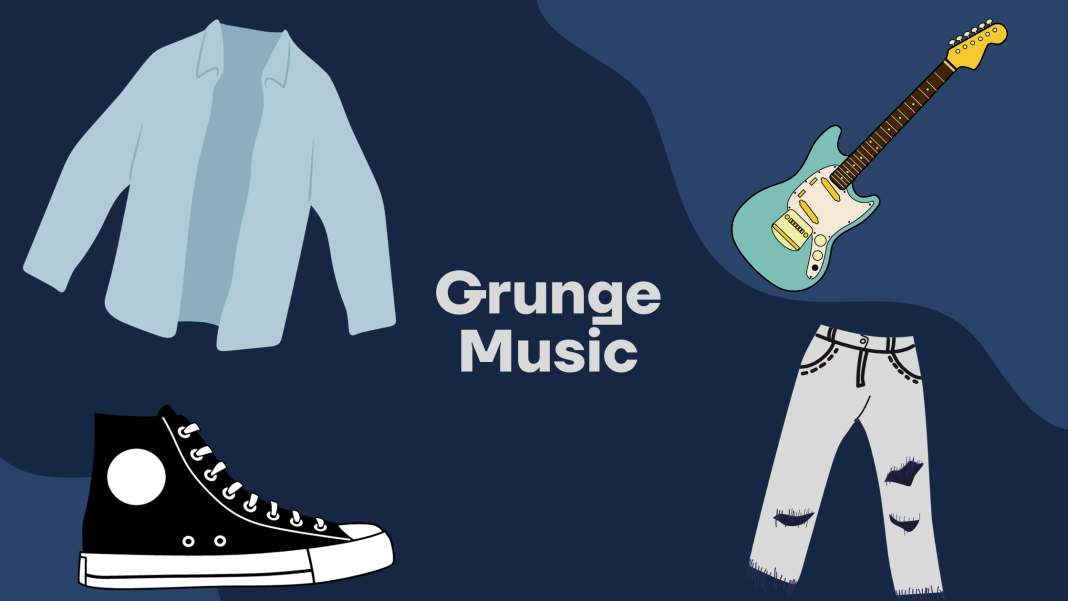
Get ready to rock out as we dive into grunge music. This genre burst onto the scene in the late 80s and early 90s, leaving an unforgettable impact on the music industry and pop culture. Grunge music completely transformed the rock scene with its gritty, unrefined sound, introspective lyrics, and unique fashion sense. So grab your flannel shirt, and let’s get started.
Introduction To Grunge
Hailing from the underground music scenes of the Pacific Northwest, grunge was primarily centered in Seattle, Washington. It was a countercultural movement that rebelled against the glossy, overproduced music dominating the mainstream at the time.
The term “grunge” itself perfectly captures the genre’s unrefined nature. It originally referred to the dirty, messy appearance or texture of something, and this aesthetic was aptly applied to both the music and the fashion associated with the genre. Grunge musicians embraced imperfection, eschewing the polished sheen of their contemporaries for a raw, authentic sound that resonated with a generation seeking authenticity in a media-saturated world.
Grunge’s rise to prominence was a testament to the vibrant underground music scenes of the 1980s, which fostered the growth of independent record labels and a DIY (Do It Yourself) approach to music production. Bands and artists in the grunge movement often recorded their music on low budgets and in small studios, leading to a sound that was starkly different from the big-budget productions dominating the charts.
But grunge’s distinctive musical style and lyrical content set it apart. Grunge’s lyrics often delved into introspective and socially relevant themes, addressing issues like alienation, disaffection, and the challenges of modern life. This introspection struck a chord with listeners grappling with their experiences.
The Birth Of Grunge
The emergence of grunge music is a captivating story of cultural and musical evolution that originated from the underground music scenes of the Pacific Northwest in the late 1980s, particularly in Seattle, Washington. Grunge’s rise to prominence was influenced by several factors, making it a defining movement in alternative rock.
Grunge owes some of its musical DNA to punk and indie rock, as the rebellious spirit of punk and the DIY ethos of the independent music scene influenced grunge bands. These musicians were uninterested in conforming to the polished sound and image that characterized mainstream rock music of the time, instead embracing a rough, raw, and unfiltered approach to music.
Grunge bands often recorded their music in low-budget studios or even home studios, allowing them to maintain creative control over their music and produce a sound authentic to their vision. This emphasis on DIY recording contributed to grunge’s distinctively unpolished sound.
The late 1980s were marked by a growing disillusionment among young people, with economic challenges, political unrest, and a disconnect from mainstream society and finding an alternative to commercialized music dominating the charts. Grunge, with its gritty sound and candid lyrics, provided that alternative.
Grunge resonated with a generation that often felt alienated and disaffected, as the lyrics of grunge songs frequently explored feelings of isolation, depression, and the struggles of everyday life. This candid expression of emotional turmoil struck a chord with listeners who found solace in the music’s relatability.
Early grunge pioneers, such as Green River and Mudhoney, laid the groundwork for the genre, honing its defining characteristics and establishing the unique sound and attitude defining grunge.
Key Characteristics
Grunge music is distinguished by several defining characteristics that set it apart from other genres, contributing to its unique sound and identity. These elements are essential to get the essence of grunge music.
The raw and distorted guitar sound is a hallmark of grunge, characterized by heavy distortion and “power chords” to create a gritty and aggressive tone. This unpolished approach to guitar playing emphasizes emotion over technical precision, becoming a defining feature of the genre.
Drop D tuning is standard in many grunge songs, where the lowest string is tuned down to a D note. This tuning allows for a heavier and more resonant sound, contributing to the genre’s overall sonic texture and enabling musicians to craft powerful riffs and melodies.
The lyrics of grunge music often explore introspective and emotionally charged themes, delving into topics such as alienation, depression, addiction, and navigating a turbulent world. This candid expression of personal struggles resonated with listeners seeking solace in the music.
Grunge musicians resisted the commercialization of their music, reflecting an anti-establishment attitude that rejected the overproduced sound prevalent in mainstream rock of the era. The genre prioritized simplicity and authenticity, favoring straightforward songwriting, music arrangements, and virtuosic solos.
Grunge’s vocal styles varied widely, from the raw and intense delivery of Kurt Cobain (Nirvana) to the melodic yet raspy singing of Eddie Vedder (Pearl Jam). These diverse vocal approaches added depth and complexity to grunge music, allowing artists to convey various emotions.
The recordings of grunge music typically featured minimalist production techniques, emphasizing the live, genuine energy of the music. This approach contributed to the genre’s lo-fi quality and made it more accessible to independent and DIY musicians.
Iconic Grunge Bands And Artists


The grunge movement was propelled into the mainstream by a select group of iconic bands and artists who defined the genre and left an indelible mark on the music industry. These musicians helped shape the grunge movement and influenced generations of musicians to come. Below are some of the most prominent figures in the grunge scene:
Nirvana
Fronted by Kurt Cobain, it is arguably the most iconic grunge band. Their second album, “Nevermind,” released in 1991, was a game-changer for grunge and the entire music industry. The album’s lead single, “Smells Like Teen Spirit,” became an anthem of a generation and catapulted Nirvana to superstardom. Kurt Cobain’s raw vocals and emotionally charged lyrics made him a symbol of grunge’s authenticity.
Pearl Jam
Led by Eddie Vedder, they achieved massive success with their debut album, “Ten,” in 1991. Known for their melodic yet intense sound and socially conscious lyrics, Pearl Jam became one of grunge’s most enduring acts. Songs like “Jeremy” and “Alive” are classics of the genre.
Soundgarden
Soundgarden, fronted by Chris Cornell, had a heavier and more complex sound than some of their grunge counterparts. Their album “Superunknown” (1994) was a critical and commercial success, featuring hits like “Black Hole Sun.” Cornell’s powerful vocals set Soundgarden apart in the grunge landscape.
Alice In Chains
Alice in Chains, led by Layne Staley and Jerry Cantrell, blended grunge with heavy metal elements. Their harmonized vocals and dark, introspective lyrics made them a distinctive force in the genre. Hits like “Man in the Box” and “Rooster” showcased their unique sound.
Stone Temple Pilots
Stone Temple Pilots, fronted by Scott Weiland, brought a slightly different flavor to grunge with their album “Core” (1992). Their music incorporated elements of classic rock, and Weiland’s charismatic stage presence made the band a standout in the grunge era.
Mudhoney
As one of the early grunge pioneers, Mudhoney helped shape the genre’s signature sound. Their raw, garage-rock-inspired music laid the groundwork for the grunge movement. Songs like “Touch Me, I’m Sick” epitomize their unrefined style.
Screaming Trees
Screaming Trees, led by Mark Lanegan, blended grunge with psychedelic rock elements. Their album “Sweet Oblivion” (1992) featured the hit single “Nearly Lost You.” Lanegan’s distinctive baritone vocals added a unique dimension.
These iconic bands and artists defined grunge and contributed to its lasting impact on music and popular culture. While some experienced tragic losses, their music continues to resonate with audiences, and their influence can be heard in subsequent generations of musicians exploring the raw and authentic spirit of grunge.
Fashion Statement

The grunge movement was not solely about music but also encompassed a distinct fashion statement that became an integral component of the subculture. The grunge fashion aesthetic was a marked departure from the glamorous and flashy styles of the 1980s, characterized by a deliberate embrace of the unkempt, comfortable, and anti-establishment.
The flannel shirt emerged as the most iconic element of grunge fashion, typically plaid and often oversized, symbolizing the grunge look. Ripped, torn, and faded jeans were also a norm, reflecting the countercultural ethos of the grunge movement, rejecting conformity and polished appearances. Beanies, often worn slouchy and slightly askew, were a staple accessory, adding an element of casual comfort to the grunge style. Doc Martens boots, known for their durability and rugged appearance, were a favorite choice among grunge enthusiasts, fitting the aesthetic and providing the support needed for attending concerts.
Layering was a defining characteristic of grunge fashion, with t-shirts worn under flannels, thermals, and cardigans creating a relaxed, layered look, conveying a sense of nonchalance and comfort. Hairstyles in the grunge scene were anything but polished, with unkempt, bedhead looks being the norm, reflecting the goal of appearing as though little effort had gone into grooming.
The grunge fashion statement directly reflected the music, embracing imperfection and eschewing the glossy image cultivated by many other music genres and fashion trends. It was not about making a fashion statement but rather a cultural statement, rejecting mainstream culture’s materialistic and superficial values.
Remarkably, the grunge fashion aesthetic transcended its subcultural origins and influenced the entire fashion industry. Elements of grunge fashion have been incorporated into high fashion collections, and the comfortable, layered look has become a staple in many people’s wardrobes.
The grunge fashion statement, at its core, served as a tangible representation of the grunge ethos – one characterized by its nonconformity, anti-authoritarianism, and authenticity. Even today, it remains a source of inspiration for fashion fans and musicians alike, who are drawn to grunge’s unassuming and rebellious nature.
Mainstream Explosion
The early 1990s marked a transformative period for grunge music as it transitioned from an underground subculture to mainstream prominence.
Undoubtedly, Nirvana’s second studio album, “Nevermind,” released in 1991, catalyzed grunge’s mainstream breakthrough. The album featured iconic tracks like “Smells Like Teen Spirit,” “In Bloom,” and “Come as You Are.” “Nevermind” resonated with a generation, offering an authentic, rebellious alternative to the polished pop and hair metal dominating the charts. It became a cultural phenomenon, selling millions of copies and propelling Nirvana to global superstardom.
MTV, the influential music television network, embraced grunge music and provided a platform for artists to reach a wider audience.
The Lollapalooza music festival, launched in 1991 by Jane’s Addiction frontman Perry Farrell, showcased a diverse lineup of alternative and grunge bands. The festival’s success exposed grunge acts to a broader audience, solidifying their place in the alternative music scene.
As grunge gained momentum, media outlets began to take notice. Magazine covers, interviews, and profiles of grunge bands proliferated, helping to create an aura of cultural significance around the genre. This heightened media attention contributed to its mainstream appeal.
The distinctive grunge fashion aesthetic, characterized by flannel shirts, ripped jeans, and beanie hats, became a global trend. Fashion designers and retailers capitalized on the grunge look, making it accessible to a broader audience and further integrating grunge into mainstream culture.
However, with the mainstream success of grunge came a sense of irony and conflict. The countercultural movement, rooted in authenticity and resistance to commercialization, was co-opted by the industry it sought to challenge. Some purists within the grunge scene felt its essence was diluted as it became more commercial.
Tragically, the mainstream explosion of grunge was marked by the untimely death of Kurt Cobain in 1994. Cobain’s passing not only marked the end of an era but also added to the mythos of grunge as a genre characterized by intense emotion and vulnerability.
Despite these challenges and conflicts, grunge’s mainstream explosion indelibly impacted music and culture. It inspired subsequent generations of musicians to embrace authenticity and explore raw, emotional themes. Grunge’s influence can be heard in the alternative and rock music that followed, and its fashion aesthetic continues to resonate in various forms.
The mainstream explosion of grunge music in the early 1990s was a cultural phenomenon that reshaped the music industry and popular culture. Iconic albums, groundbreaking music videos, influential festivals, media attention, and a distinct fashion sense drove it. Grunge’s journey from the underground to the mainstream remains a testament to music’s authentic, unvarnished expression.
Lasting Legacy
Despite its relatively short period of dominance in the mainstream music scene, grunge has left an enduring legacy that continues to influence music, fashion, and culture. Its impact extends beyond its origins in the Pacific Northwest and its moment in the spotlight.
Grunge laid the foundation for the continued evolution of alternative rock, inspiring many bands that followed, especially in the 1990s and early 2000s. The post-grunge movement embraced similar themes and musical elements, ensuring that the spirit of grunge endured.
Grunge’s emphasis on authenticity and emotional expression has had a lasting influence on music across genres. Artists today continue to explore raw and vulnerable themes in their lyrics, mirroring the candid introspection that defined grunge. This commitment to authenticity resonates with audiences seeking genuine and relatable music.
Elements of the grunge aesthetic periodically reemerge in the fashion world, with designers and fashion enthusiasts drawing from grunge’s casual, anti-establishment style and adapting it to contemporary trends.
The legacy of iconic grunge bands like Nirvana, Pearl Jam, and Soundgarden endures through their music and cultural influence, serving as a touchstone for those exploring the boundaries of rock and alternative music.
Grunge’s cultural relevance is evident in its enduring presence in film, television, and literature, frequently referenced as a symbol of the 1990s and a pivotal moment in music history.
The message of nonconformity, individuality, and resistance to societal norms remains relevant, encouraging individuals to embrace their unique identities and question prevailing conventions.
Grunge’s lasting legacy transcends its brief period of commercial success, continuing to influence music, fashion, and culture, resonating with those who value authenticity, emotional expression, and a willingness to challenge the status quo.


