



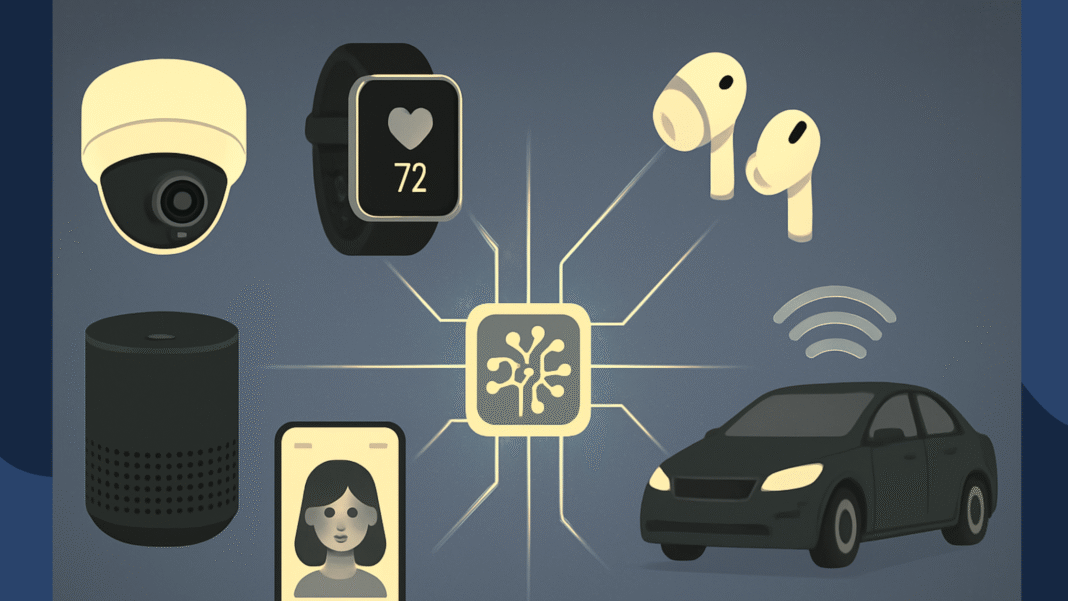
Edge AI is transforming everyday gadgets, making them smarter and more efficient. Its impact on standard devices ranges from enhanced privacy to improved speed. We’ll examine how this technology is reshaping user experiences and device capabilities.
1. Edge AI Enhances Gadget Speed And Privacy
Edge AI makes everyday gadgets faster, more private, and more responsive by processing data locally on the device rather than relying on the cloud. This reduces latency, improves reliability, and keeps sensitive data from being sent over the internet unnecessarily. A good example is smart home security cameras. Many now use Edge AI to detect motion, recognize faces, or differentiate between a person, pet, or vehicle without sending video footage to the cloud first. This means faster alerts, fewer false alarms, and better privacy, since footage stays local unless needed.


Vipul Mehta, Co-Founder & CTO, WeblineGlobal
2. Smart Cameras Showcase Edge AI Capabilities
Edge AI revolutionizes everyday electronics by providing devices with better intelligence, speed, and autonomy without using intensive cloud resources. In other words, Edge AI is putting the processing of data and the decision-making activity on the device when and where the data is collected, rather than sending everything off to another site or cloud storage location for analysis. This provides quicker responses, lower latency, and improved privacy in today’s world with the goal of real-time decisions. Smart cameras for home security offer a good example. Some modern cameras, like Ring or Nest, use Edge AI in a camera-based device to analyze video feeds in real-time.
Instead of constantly streaming video content to the cloud and seeing ‘reasonable’ changes to the feed only every few seconds, these smart cameras allow you to collect videos for a defined duration before they engage the analysis process. During that analysis, the camera does not depend on cloud resources and instead involves local processing. So, no more freezing or waiting for motion detection or for it to identify faces or particular objects. It tracks and identifies motion, uses stored photos instead of online resources, and does everything in real-time. Thus, there are faster alerts, better use of bandwidth, less dependence on cloud storage, and costs saved by both the manufacturer and you.

Sergio Oliveira, Director Of Development, DesignRush
3. Edge AI Rewires User Expectations
From my perspective, Edge AI’s most crucial responsibility is psychological. It’s conditioning consumers to expect instantaneous and invisible personalization from every interaction. We’re moving past a world where you notice the AI working. Instead, the technology disappears into a seamless experience that feels like magic, fundamentally rewiring user expectations for speed and relevance.
A perfect example is the portrait mode on your smartphone camera. The AI processes the image, identifies the subject, and instantly blurs the background on the device. The user doesn’t think about the complex computation. They see a great photo. This creates a new baseline of quality and immediacy, putting immense pressure on every other brand interaction. If your phone is that smart, why is a brand’s website or ad so generic and slow?

Maxwell Finn, Founder, Unicorn Innovations
4. Local Processing Boosts Device Intelligence
Edge AI is becoming increasingly important in our daily gadgets because it allows devices to analyze data directly on the device itself without constantly connecting to the internet. This leads to quicker responses, better privacy, and reduced internet data usage. An example of this is in smart home devices like voice assistants. For instance, smart speakers can recognize voice commands and wake words instantly by processing data locally, providing faster replies even if the internet connection is weak.
Security cameras also use Edge AI to detect movement, recognize people, or distinguish between a person and an object in real time. This helps the cameras send alerts faster and avoids sending unnecessary video footage to the cloud. Overall, Edge AI makes everyday devices smarter, faster, and more efficient, making life more convenient and user-friendly.


Matthew Ramirez, Founder, Rephrasely
5. Real-Time Anomaly Detection Without The Cloud
For me, one of the most unique and underrated responsibilities of Edge AI in today’s everyday gadgets is real-time anomaly detection, especially in household devices like smart plugs, doorbell cameras, and even robot vacuums. Edge AI processes data locally, unlike cloud-based AI systems that require internet connectivity and send data off-site for analysis. This allows gadgets to recognize unusual patterns such as abnormal power consumption, unfamiliar movement, or strange sounds immediately and autonomously. For instance, a smart plug with Edge AI can learn your refrigerator’s daily energy usage profile and alert you if something’s off, like a sudden power spike that could signal a malfunction.
What makes this interesting is its privacy-preserving responsiveness. These smart devices can flag suspicious events without exposing your data to cloud servers. It’s security and diagnostics in real-time, without latency or reliance on internet uptime. In a world increasingly concerned with cybersecurity and sustainability, this localized intelligence is quietly reshaping how we monitor and manage the tech around us, making our homes safer, more efficient, and less dependent on centralized systems.


