Market makers are responsible for the smooth functioning of financial markets, often operating behind the scenes. Learn the roles these unsung heroes perform to ensure liquidity and to stabilize trading environments; market makers are essential partners in finance.
Market Makers Ensure Liquidity And Efficiency
Market makers are vital in ensuring liquidity and efficiency in financial markets. At their core, market makers are firms or individuals that continuously quote buy and sell prices for specific securities, typically holding an inventory of those assets. This allows them to step in and complete trades even when buyers or sellers aren’t immediately available, keeping the market flowing smoothly.
From my perspective as a founder and someone who closely monitors financial systems, market makers act as the connective tissue of trading environments. Without them, especially in less liquid markets, price volatility could spike and transactions might get delayed or fail altogether. Their presence helps narrow the bid-ask spread, improving pricing and fairness for all market participants.
A good way to think about it is this: when you want to buy a stock, you don’t always have to wait for a seller to appear. The market maker may sell it to you directly from their inventory, and later sell it to another party when the opportunity arises. This ongoing activity helps prevent order book gaps and ensures that trading continues seamlessly throughout the day.
What stands out is the risk they take on. They must be strategic in pricing because they’re exposed to market shifts. However, their willingness to take that risk helps stabilize volatile environments. Understanding how market makers function has helped me draw parallels to our business at Zapiy.com, where speed, access, and reliability are key. Building systems that support consistency, reduce friction, and anticipate demand in both arenas leads to smoother operations and better outcomes for everyone involved.

Bridging Supply And Demand In Financial Markets
Market makers are specialized financial entities that continuously provide buy and sell quotes for specific securities, essentially creating liquidity where it might otherwise be limited. In my experience implementing automated marketing systems, I see parallels to how market makers operate—they bridge gaps between supply and demand to ensure transactions can occur without dramatic price swings.
By maintaining a two-sided market, they narrow the bid-ask spread, reducing transaction costs for all participants while absorbing short-term market imbalances. This stabilizing function is crucial during market stress when natural buyers and sellers might disappear. The most sophisticated market makers leverage advanced algorithms to manage risk while providing this essential service. This is similar to how our platform uses AI to balance resources across client needs, ensuring consistent performance even during demand fluctuations.

Vick Antonyan, CEO, Humble Help
Continuous Quoting Stabilizes Trading Environment
Market makers are entities—typically financial institutions or specialized firms—that provide liquidity in financial markets by continuously quoting buy (bid) and sell (ask) prices for assets such as stocks, currencies, or commodities. Their responsibility is to ensure there’s always a counterparty available for traders looking to buy or sell, thus facilitating smoother and more efficient market operations.
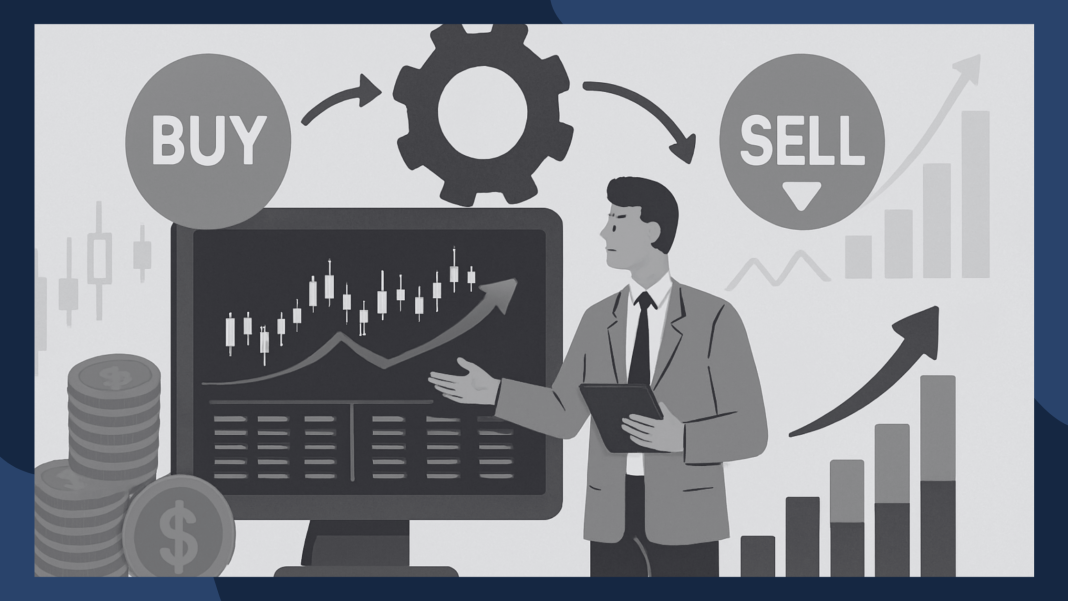
When a trader wants to buy a stock, a market maker sells it to them from its inventory. Conversely, when a trader wants to sell, the market maker buys it. This constant readiness to transact helps reduce the bid-ask spread, which is the difference between the buying and selling price. Narrower spreads lead to lower trading costs for investors and encourage higher trading volumes.
Market makers are responsible during times of low liquidity or high volatility by absorbing order imbalances and maintaining orderly price movements. They profit from the slight differences in the buy and sell prices, known as the “spread,” and sometimes from incentives provided by exchanges for providing liquidity.
Without market makers, buyers and sellers would need to wait for each other to initiate trades, which could lead to delayed transactions and increased price volatility. By bridging this gap, market makers stabilize markets and increase investor confidence. Market makers ensure smoother trading by providing continuous buy-and-sell quotes, maintaining liquidity, narrowing spreads, and supporting price stability, even during turbulent market conditions.

Bijal Shah, Senior Business Development & Digital Marketing Manager, WP Plugin Experts
Unsung Heroes Keep Markets Moving Smoothly
Market makers are essentially the unsung heroes of trading. They ensure that buying and selling happen smoothly, even when the market feels a bit quiet or there are no immediate buyers or sellers. These entities or individuals step in with buy and sell offers at all times, essentially keeping the market moving and helping traders avoid delays.
One way to think of them is like a broker at a busy marketplace, always there to ensure someone is willing to buy your goods or sell you what you need, even if there aren’t immediate buyers or sellers. Their job is to keep liquidity flowing by standing ready with inventory, whether stocks, bonds, or other financial assets. By constantly offering to buy at one price and sell at another, market makers ensure the market doesn’t grind to a halt.
This benefit is twofold: market makers help reduce volatility by stabilizing prices and tightening spreads between buying and selling. Without them, prices could jump erratically, and executing orders could take much longer, especially in more illiquid markets. Think about it like this—if you’re looking to sell something quickly but can’t find a buyer, a market maker will step in and ensure your trade goes through without hassle.
They’re also key players in ensuring that prices stay fair. Because they’re constantly buying and selling, they help set a real-time price for assets, which keeps things transparent for everyone involved. Essentially, they help create a balance in a sometimes chaotic market, ensuring that things don’t get out of control and investors and traders feel confident their trades will go through.

Peter Wootton, SEO Consultant, The SEO Consultant Agency
Strategic Partners For Project Success
Market makers are crucial in ensuring liquidity and minimizing slippage in traditional and crypto markets. In one DeFi project I worked with, the absence of a reliable market maker led to high volatility and poor user experience at launch. Once we onboarded a professional market maker, they stabilized the token price by continuously quoting buy and sell orders, which encouraged more organic trading.
This presence helped reduce the bid-ask spread and made it easier for larger investors to enter and exit positions without moving the market. Effective market makers also help build credibility in early-stage projects, signaling maturity and operational readiness. For founders, partnering with a market maker isn’t just about improving trading conditions; it’s a strategic decision that can significantly impact the project’s long-term success and perception in the market.

Victoria Olsina, Web3 SEO Agency Founder, VictoriaOlsina.com
Unsung Architects Of Market Liquidity
Market makers are some of the most vital—but often overlooked—participants in the trading ecosystem. After explaining what they do and how they operate, it’s clear that they are not just middlemen—they are the engine that keeps markets fluid, fair, and functioning efficiently.
They take on risk, maintain liquidity, and ensure buyers and sellers can transact quickly, even in high volatility or low volume. Whether trading shares of a blue-chip company on the NYSE or executing a forex trade at midnight, a market maker is almost always working quietly in the background, ensuring you get a price and a partner for your trade.
Without market makers, modern financial markets would grind to a halt. Bid-ask spreads would widen, transaction times would increase, and price discovery would become sluggish and unreliable. Their responsibility is especially crucial in less liquid markets, where the presence of a reliable counterparty can mean the difference between a successful trade and a missed opportunity.
From my point of view, understanding how market makers function isn’t just useful—it’s necessary. It gives traders, investors, and even casual market observers a clearer picture of what’s happening behind the ticker tape. Whether managing a hedge fund or just placing your first stock trade, knowing someone is there to ensure seamless execution brings confidence to every move.
In short, market makers are the unsung architects of market stability. And while their operations might seem invisible at first glance, their impact on smooth trading is massive. So the next time your trade executes instantly or your quote updates in real time, take a moment to appreciate the skilled professionals and high-tech systems working behind the scenes to make it all possible.