

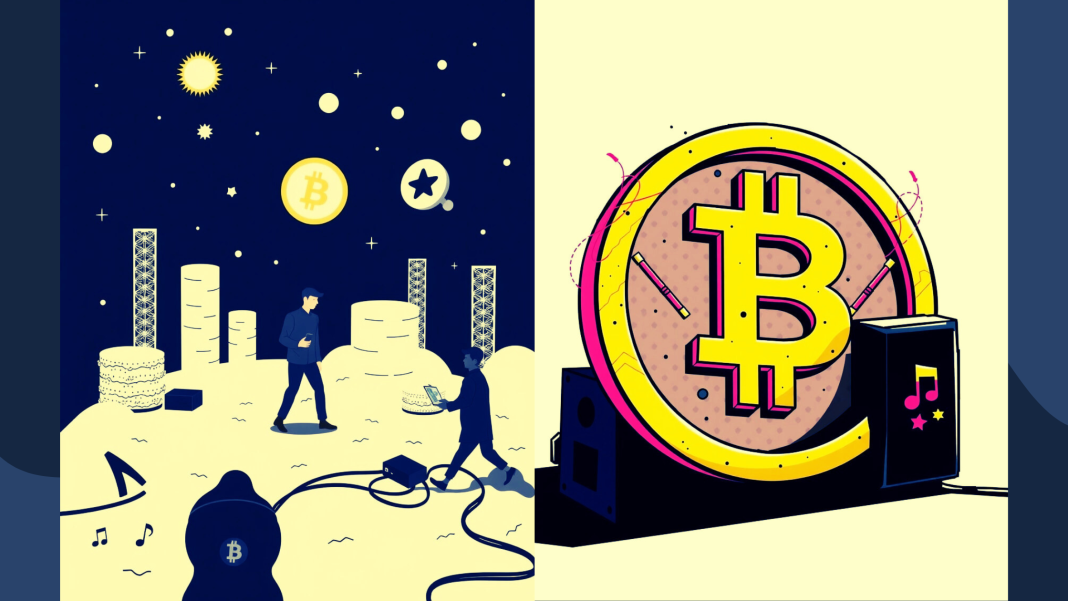
Allow us seasoned experts to unpack NFTs and blockchain technology’s transformative hold in the music industry. It explores the revolutionary ways artists can now manage and own their creations. Discover the synergy between tokenization, early supporter investment, and the use of NFTs in reshaping the music ownership paradigm.
Tokenize Music For Greater Control
NFTs and blockchain technology have transformed music ownership by enabling artists to tokenize their work, thereby creating verifiable digital assets that can be bought, sold, or traded on decentralized platforms. This system empowers musicians to bypass traditional record labels and retain greater control over their intellectual property and revenue streams through smart contracts, which automatically manage royalty distributions and licensing terms.
Furthermore, blockchain introduces transparency and security into the music industry by ensuring every transaction is recorded on an immutable ledger. This fosters trust between artists and fans, facilitates fractional ownership of music rights, and opens up new revenue opportunities through unique fan experiences and exclusive content, fundamentally reshaping how music is owned, shared, and monetized in the digital era.

Shehar Yar, CEO, Software House
How Smart Contracts Ensure Fair Payouts?
For decades, I have witnessed many musicians struggle with opaque royalty systems, delayed payments, and unfair revenue splits. The traditional music industry relies on intermediaries—record labels, publishers, streaming platforms—each taking a cut before artists see their share. As a result, independent musicians, and even major artists, often find themselves fighting for fair compensation. However, blockchain technology and smart contracts are changing the game, offering a transparent and automated solution that ensures artists receive their rightful earnings in real-time.
A smart contract is a self-executing agreement written in code and stored on a blockchain. When a song is played, purchased, or licensed, the contract instantly distributes payments to everyone involved—artists, producers, songwriters—based on pre-agreed terms. Unlike traditional royalty systems, where payments can take months (or even years) to trickle down, blockchain-based smart contracts execute transactions immediately. This means an artist can get paid when their song is streamed, with no middlemen taking unexpected cuts.
One of the biggest advantages of smart contracts is their transparency. Every transaction is recorded on a blockchain, making altering or manipulating royalty payments after the fact impossible. This game-changer is for artists who have historically struggled with underreported streams and ambiguous financial statements. Using decentralized ledgers, musicians can track their earnings in real-time, ensuring industry gatekeepers do not shortchange them.
That said, while smart contracts offer enormous potential, the technology is still evolving. Adoption across major streaming platforms and record labels remains slow, and regulatory questions around blockchain-based payments continue to be debated. But the momentum is undeniable. More artists are turning to blockchain-powered platforms to release music, ensuring they maintain control over their work and receive fair compensation. In a world where artists have long been at the mercy of industry executives, smart contracts are ushering in a new era where musicians can finally confidently take ownership of their earnings.
Own Belief In Artists Early
I’ve been following the intersection of music, tech, and Web3 closely–and here’s something most people overlook when talking about NFTs and music ownership: It’s not really about “owning the song.” It’s about owning your belief in the artist–early. Traditional music ownership was transactional. You bought a CD or an MP3. You were paying to listen. But NFTs flipped that–now you’re paying to signal something: “I was here before this blew up.”
That might sound like hype, but it’s powerful. Think of it like angel investing but for culture. When fans buy an NFT tied to a song or album, they’re not just purchasing access but attaching themselves to the artist’s rise. And if that artist breaks through, the fan’s stake becomes a cultural artifact—a receipt for belief.
What blockchain enables is permanence. That’s what changes the dynamic. There’s no record of you supporting a piece of indie music and its artist on SoundCloud in 2014. No upside, no acknowledgment. But if you minted a limited-run track as an NFT? That support gets etched into the chain–forever. This doesn’t replace traditional ownership models. It rewrites why people want to own music in the first place. Not to access it but to be part of it.

Derek Pankaew, CEO & Founder, Listening.com
From Labels To Ledgers: The Shift Toward Decentralized Music Ownership
For decades, record labels have controlled the music industry’s financial backbone. Signing a deal with a label meant access to marketing, distribution, and industry connections—but it also meant giving up ownership and creative control. Many artists locked themselves into contracts where they saw only a fraction of their earnings while labels took the lion’s share. However, blockchain technology is rewriting this narrative, allowing musicians to bypass traditional gatekeepers and directly own their work through decentralized platforms.
At the heart of this shift is the concept of tokenized ownership. With NFTs (non-fungible tokens) and blockchain-based music distribution, artists can mint their songs or albums as digital assets, selling them directly to fans. I believe this model allows musicians to set their prices and creates new revenue streams through resale royalties. Unlike traditional music sales, where an artist earns nothing when a fan resells their vinyl or CD, blockchain-based transactions ensure that artists receive a cut every time their NFT changes hands. This continuous revenue model is a game-changer for independent musicians who rely on fan support to sustain their careers.
Another major advantage of blockchain-driven music ownership is its transparency. In the traditional music industry, tracking ownership rights can be a logistical nightmare, especially when multiple songwriters, producers, and collaborators are involved. Blockchain simplifies this by providing an immutable ledger that records every contribution and revenue split, eliminating disputes over royalties and intellectual property. Instead of relying on complex contracts and third-party administrators, smart contracts automatically enforce ownership terms, ensuring every contributor gets paid relatively and instantly.
Of course, this transition to decentralized music ownership is not without challenges. The technology is still in its early stages, and mainstream adoption among major streaming platforms and labels has been slow. Legal and regulatory questions surrounding NFTs and blockchain-based royalties must also be addressed. But despite these hurdles, the trend is clear: more artists are turning to blockchain to reclaim control over their music. The shift from labels to ledgers isn’t just a technological evolution—it’s a cultural revolution, giving musicians the power to define their careers on their terms.
Revolutionize Music With NFTs
NFTs and blockchain technology have revolutionized the way music ownership is viewed. Last year, I helped a client launch a limited edition album as an NFT, allowing fans to own a unique, verified piece of the music. This shift gives artists direct control, cutting out the intermediaries. What’s been particularly powerful is the ability to offer additional perks, like backstage access or exclusive content, tied to each NFT.
For fans, it’s not just about owning a song—it’s about holding a collectible piece of the artist’s journey. Blockchain ensures transparency, tracks royalties, and eliminates issues like piracy. My client saw a significant boost in revenue from both the NFT sale and the increased engagement with their fanbase. The impact is huge: artists are gaining more autonomy, and fans are investing in the artists they love in new, innovative ways.

Nikita Sherbina, Co-Founder & CEO, AIScreen
Legalities And Ethics Questions Of NFTs In Music
The rise of NFTs in the music industry has sparked excitement and skepticism. On the one hand, blockchain technology offers musicians unprecedented control over their work, enabling them to sell digital collectibles, secure fairer royalties, and engage with fans in new ways. On the other hand, the legal and ethical questions surrounding NFTs are far from settled. Issues like copyright disputes, market speculation, and the environmental impact of blockchain transactions have raised concerns among artists, industry professionals, and regulators alike.
One of the biggest legal challenges is copyright ownership. In traditional music contracts, rights to a song are often divided among multiple parties—songwriters, producers, record labels, and publishing companies. When an artist mints an NFT of their music, it raises critical questions: Do they have the legal right to tokenize that song? What happens if another party claims ownership? The decentralized nature of blockchain makes it difficult to enforce intellectual property laws, leading to cases where NFTs of songs are sold without proper authorization. This has already resulted in legal battles, and as the industry moves further into Web3, artists must be extremely cautious about securing rights before releasing music as NFTs.
Beyond legal concerns, I think ethical issues also loom large. One of the most controversial aspects of NFTs is their speculative nature. Many NFT marketplaces operate similarly to the stock market, with fluctuating prices based on hype rather than intrinsic value. Some artists have made millions selling NFTs, while others have seen their digital assets lose value overnight. This raises the question: Are NFTs sustainable for musicians to make money, or are they just another bubble waiting to burst? Fans who invest in music NFTs expecting long-term value may end up disappointed if the market crashes, leading to ethical concerns about whether artists and platforms promote a financial model that benefits a few while leaving many at a loss.
Then there’s the environmental impact. Many blockchain networks, especially those using proof-of-work systems, require massive computing power to verify transactions. This has led to criticism from environmentalists who argue that minting NFTs contributes to carbon emissions. While some platforms are transitioning to more energy-efficient proof-of-stake models, the debate over blockchain’s environmental cost continues. Artists who want to embrace NFTs must weigh the financial benefits against potential backlash from environmentally conscious fans.
Despite these challenges, NFTs and blockchain technology aren’t going away. Instead, they force the music industry to confront long-standing ownership, transparency, and artist compensation issues. While legal frameworks and ethical standards are still catching up, one thing is clear: NFTs have opened a new frontier in music, and how we navigate these challenges will shape the industry for years to come.


