



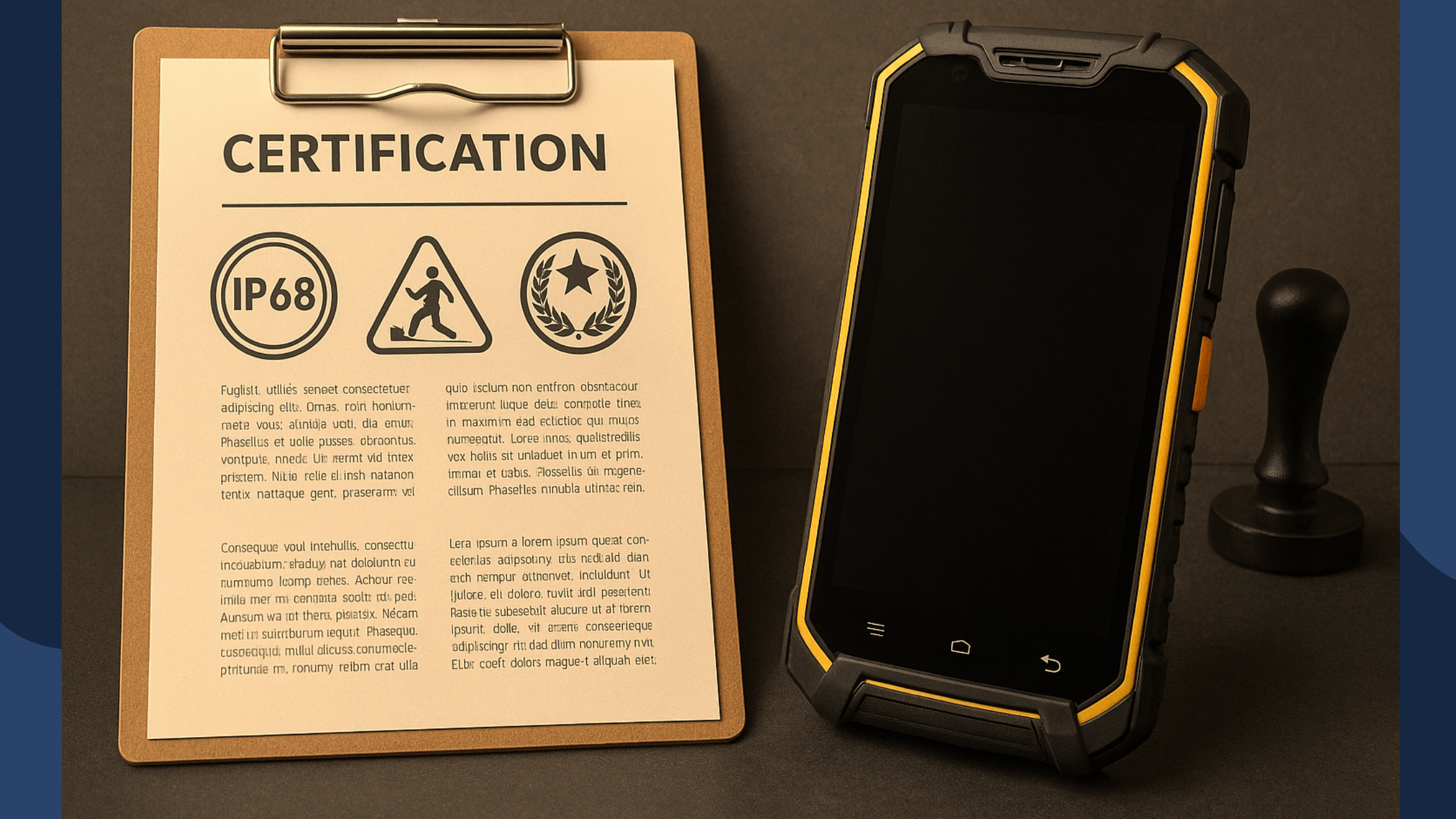
Rugged gadgets are built to withstand harsh conditions, but how do they earn their formidable reputation? Let’s find out the certification process for rugged devices, the significance of IP and MIL-STD ratings, and why these certifications are vital for various industries.
The Hidden Tests Manufacturers Rarely Talk About
Most people think about rugged gadget certification, they picture the usual marketing highlights: IP ratings for water and dust, MIL-STD-810 for shock and vibration. But behind the glossy spec sheets, manufacturers often subject their devices to obscure, concrete tests that never make it into public materials. These can include rapid thermal cycling that mimics the brutal shift from a freezing warehouse to a scorching worksite, or salt fog exposure that tests how corrosion-resistant a device is when used near ocean air. Some brands even simulate electromagnetic interference environments to ensure their devices won’t glitch when surrounded by high-powered equipment.
Trust me, these hidden tests aren’t always about bragging rights but liability and longevity. A device might pass the standard rating, but still fail under unusual conditions that only occur in niche industries like oil exploration, maritime operations, or aerospace maintenance. In many cases, the results of these deeper tests remain confidential because they reveal where the product’s limits lie. That’s why two gadgets with the same public certification can perform very differently in the real world; one may have quietly endured far more than the minimum requirements, while another barely scraped by.
Certifications Limited Scope Of Real-World Durability
Regarding rugged gadgets and certifications, an aspect is often overlooked. Some of these ratings are less about real-world durability and more about passing a specific lab-based game of “survivor.” While most rugged gear boasts MIL-STD-810H or IP68 certifications, the reality is that these tests are often modular. This means a device might pass a drop test in one scenario, for example, onto plywood over concrete from 4 feet, but not necessarily in others (such as falling on a rocky trail in winter while bouncing around in a backpack with metal keys).
Additionally, a little-known fact is that manufacturers often self-certify for many of these standards. They conduct internal tests, possibly with a third-party lab, but no central authority confirms every claim unless you’re in highly regulated industries like aerospace or military contracts. So when a brand claims its product is “certified to military spec,” it might mean it survived a handful of pre-approved conditions that loosely simulate battlefield environments indoors, under controlled lighting, with no chaos.
That being said, do these ratings matter? Absolutely, but only if you understand what they’re indicating. A high IP rating signifies waterproofing. A MIL-STD certification means the device might not instantly shatter in the rain. However, no guarantee that your phone will survive a weekend rock climbing trip exposed to dust, moisture, shock, and impact all at once. Therefore, if your life depends on a gadget surviving the apocalypse, opt for the one that exceeds the rating, not just the one that advertises it.


Derek Pankaew, CEO & Founder, Listening.com
IP And MIL-STD Ratings Gauge Device Resilience
Rugged gadgets undergo certification processes focused on IP (Ingress Protection) ratings and MIL-STD (Military Standard) certifications, which are crucial for assessing durability in challenging environments. IP ratings, set by the IEC, indicate protection against solids (0-6) and liquids (0-9). For example, an IP68 rating means a device is dust-tight (6) and can withstand continuous immersion in water beyond 1 meter (8).
MIL-STD-810 is a US military standard that includes tests for extreme temperatures, shock, vibration, humidity, and more. Devices claiming MIL-STD compliance have undergone relevant tests, such as drop tests from specific heights. These certifications are essential, providing a standardized measure of a gadget’s resilience, which gives consumers confidence in a device’s performance during outdoor adventures, industrial use, or in preventing accidental damage. Without these certifications, evaluating a gadget’s true ruggedness would be largely speculative.


Dhari Alabdulhadi, CTO & Founder, Ubuy Peru
Rugged Device Certifications Crucial For Industries
Rugged gadgets undergo rigorous testing to meet standards like MIL-STD-810 and IP ratings, which assess durability under extreme conditions. These certifications evaluate resistance to water, dust, shock, and temperature variations. Independent testing ensures that devices meet specific thresholds, providing a reliable benchmark for performance in demanding environments. Certifications are significant for industries requiring dependable equipment in harsh settings, such as construction or logistics. They offer assurance of long-term durability, reducing replacement costs and downtime. Investing in certified devices aligns with operational efficiency and risk management, making the ratings a critical consideration for informed purchasing decisions.


Linda Chavez, Founder & CEO, Seniors Life Insurance Finder
When Ratings Fall Short
Certification ratings are designed to simulate extreme environments but can’t replicate every chaotic variable of real-world use. For example, a device rated IP68 might survive submersion in clean, still water during lab tests, yet fail in a shallow river because of sediment infiltration or water pressure from movement. Similarly, a gadget that passes a drop test from a standard height onto a steel plate in controlled conditions may still shatter when dropped onto an uneven rock surface, something the test never accounted for. These mismatches happen because standardized tests prioritize repeatability and measurable benchmarks, not the unpredictable mix of hazards a user might encounter in daily operations.
Based on my observation, military-grade ratings like MIL-STD-810 can fall short in the field. That’s because the certification allows for various test methods, and manufacturers can choose the ones that best suit their product’s strengths. A device could be “military-rated” for shock resistance but never tested for high-altitude performance or humidity extremes. In industries like construction, marine transport, or emergency services, those untested scenarios can be where failure often happens at the worst possible time. It’s a reminder that ratings are a starting point, not an ironclad guarantee, and that context-specific durability matters as much as the number on the spec sheet.


