



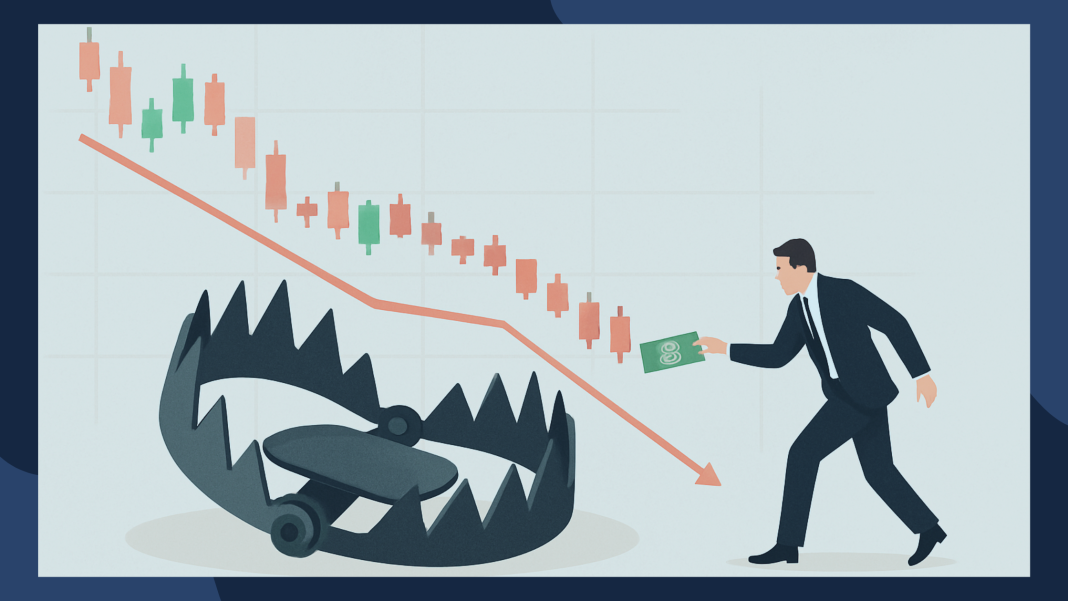
Short selling is a complex investment strategy that carries significant risks. Financial professionals have identified the key dangers of betting on stock price declines. Understanding these risks is crucial for investors considering short selling as part of their investment approach.
Short Selling Explained: High Risk, High Reward
Short selling is a technique in which an investor sells shares of a stock, borrowing them and hoping to purchase them back at a lower price. If the stock falls, the investor makes money on the difference. However, if the stock rises, the investor loses significant money. Unlike regular investments, where the worst you can lose is the initial amount, short selling can result in unlimited losses.
This approach is dangerous since there is no cap on how much a stock can increase in price. A small error or an unforeseen movement in the market can lead to huge losses. Investors trust the market to act as they anticipate, but the markets can move quickly, making managing risk impossible. This can be a risky approach for people who do not understand how markets can move.
For the majority, short selling is not an appropriate option. It involves an advanced understanding of how the market acts and accepting high risk. Although short selling has the potential to bring rapid rewards, it can also expose the investor to severe financial losses. More conventional forms of investment, on the other hand, can offer a more secure route to wealth, with risk that is more readily controlled.


Betsy Pepine, Owner & Real Estate Broker, Pepine Realty
Borrowing Stocks To Bet On Price Drops
Short selling is when an investor borrows shares of a stock they don’t own and sells them, betting that the stock price will drop. It can be a profitable investment strategy since if the price falls, the investor can repurchase the shares at a lower price. This means they can return them to the lender, and the difference is all profit.
As you can see, it’s a risky investment trait not for the faint of heart. If the stock price goes up instead of falling, investors could lose more money than they invested. The worst part is that there is no limit to how high the price can go. This high-risk strategy tends to be used by more experienced investors than novices.


Tim Schmidt, Investment Advisor, Marketing Strategist, & Business Owner, Gold IRA Custodians
Short Selling Risks Unlimited Losses
Short selling is a risky tactic in which you sell shares of a stock, borrow them, and hope to purchase them back at a lower price. You want to profit from a drop in the stock’s value. Although this strategy seems easy, it is risky.
The biggest risk is the possibility of unlimited losses. If the stock price increases rather than drops, you will still have to purchase the stocks at a higher price. Say you short a stock at $50 per share and it goes to $200; your losses could be enormous. In contrast with buying stocks, where your losses will be limited by the amount you invested in them, short selling leaves you open to near-infinite loss if the stock price keeps going up.
Another difficulty is market volatility. Stocks are also erratic, shifting abruptly in value based on unpredictable events: earnings reports, company announcements, or even broad market movements. To those uninformed about short selling, the strategy can quickly become a bet rather than a well-informed investment technique.
While some investors view short selling as a way to make money in a bear market, it is not for the faint-hearted. Being aware of what is going on in the markets and having a well-defined risk management strategy is crucial. Short-selling risks require a good game plan and the ability to expect unexpected moves in the market.

Brandon Aversano, CEO, The Alloy Market
Profit From Stock Declines With Caution
Short selling is a strategy that occurs when an investor borrows shares of a stock from a broker and sells them at the prevailing market price, planning to repurchase them at a lower price later. The aim is to make money from a stock price decline. If the stock’s price is the investor buys back the stock at the new, lower cost, returns the shares to the lender, and keeps the difference.
However, there are several reasons why short selling is a risky tactic. First, if the stock price rises instead of falls, the investor could face unlimited losses since there is no theoretical limit to how high a stock’s price can increase, when the GameStop short squeeze occurred in 2021, short sellers were crushed because the price soared to astronomical levels due to swarms of retail investors buying the stock.
In addition, since short sellers must pay interest on the stock they borrow, they may have to buy back the shares at any time, even if the price has not fallen as anticipated, potentially resulting in a substantial loss.

Arsen Misakyan, CEO & Founder, LAXcar
Double-Edged Sword Of Short Selling
With years of experience in equity markets, I know short selling can be a dangerous trap. However, it’s not inherently evil or useless—when used responsibly and with sound research, short selling can be important in revealing overvalued companies, keeping markets efficient, and even protecting portfolios through hedging strategies.
But make no mistake: this is not a strategy for the faint of heart or the inexperienced. Unlike traditional investing, where your downside is limited to the money you put in, short selling exposes you to theoretically unlimited losses. The market can remain irrational longer than you can stay solvent, as the old saying goes, and those betting against rising stocks often learn that lesson the hard way.
Timing, risk management, and a deep understanding of the asset you’re shorting are all critical. Even with those, unpredictable events—like short squeezes or sudden positive news—can send prices soaring, wiping out positions in hours. That’s why professional traders trade short selling carefully and with clear exit strategies.
From my perspective, short selling serves a vital function in our financial ecosystem by challenging overhyped narratives and helping to pop speculative bubbles. However, shorting can feel more like gambling than investing for the average retail investor, especially those lured by headlines or viral trends. And that’s where the real danger lies.
If you’re considering short selling, my advice is this: learn everything you can before jumping in. Understand the mechanics, the risks, the borrowing costs, and the psychological toll—practice in a simulated environment. And never risk more than you can afford to lose. There are no guaranteed wins in the investing world, but with short selling, the stakes can be much higher than most realize.


