The Apple 1 marks a moment in the evolution of personal computing. Launched in 1976, this minimalist computer board demanded that users provide their power supply, keyboard, and monitor. Despite its basic nature, the Apple 1’s combination of simplicity and cost-effectiveness revolutionized the market, making it an extraordinary innovation for its era.
Hardware

Apple 1 Hardware, Image By Wikimedia Commons, License.
Central to the Apple 1’s functionality was the 6502 microprocessor, a chip celebrated for its remarkable efficiency and adaptability. This 8-bit processor was responsible for executing the computer’s calculations and managing the data flow. For data storage, the Apple 1 utilized dynamic RAM (DRAM) chips, which, while effective, were quite costly and volatile, necessitating a continuous power supply to maintain the stored information.
The computer’s output was quite unique. Rather than relying on a specialized video chip, it ingeniously utilized a mix of shift registers and character ROM to create a text-oriented display. Although this method restricted graphical capabilities, it was economical and effective for its era. Additionally, the Apple 1 featured fundamental input/output circuitry to manage connections for the keyboard and monitor.
Software
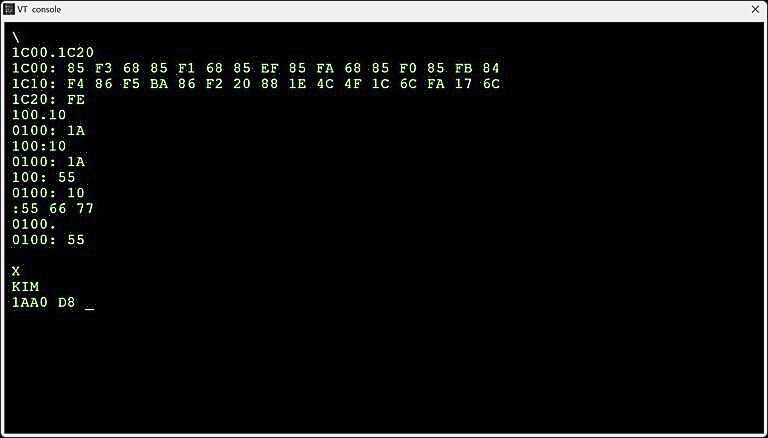
Wozmon On KIM-1 Clone, Image By Retro Computing Hansotten.
The Apple 1 was equipped with very limited software, showcasing the early development of personal computing during the mid-1970s. Its operating system was primarily a simple monitor program known as WozMon, enabling users to engage with the computer at the assembly language level. For those looking to execute more sophisticated applications, entering machine code by hand or retrieving programs from cassette tapes was necessary.
The lack of a pre-installed high-level language such as BASIC, which became standard in subsequent computers, highlighted the Apple 1’s fundamental and unrefined character. Yet, this limitation gave seasoned programmers the freedom to dive deep into the machine’s potential, unencumbered by the restrictions of a set programming framework.
With its primitive hardware, the machine gave rise to an equally simplistic software ecosystem. The constraints of the machine’s memory and processing capabilities made software development quite difficult.
Most of the applications created for Apple 1 were developed in assembly language, meaning programmers had to interact directly with the hardware. This low-level programming approach was essential because there were no interpreters or compilers for high-level languages at the time.
The early software applications were largely practical, centering on functions such as basic arithmetic, basic games, and text editing.
Apple 1 may not have boasted a dedicated operating system, but it did feature a simple monitor program known as “Wozmon,” which offered users a basic level of system management. This program enabled individuals to inspect and alter memory contents, run machine code instructions, and perform fundamental input/output tasks.
Such a stripped-down environment encouraged a passionate group of programmers to explore the hardware’s capabilities, leading to the creation of inventive software solutions. It’s worth mentioning that the software environment for the Apple 1 was quite limited when compared to future platforms.
Nevertheless, the hurdles encountered by early developers in fine-tuning software for this machine played a significant part in discovering new programming techniques and algorithms that would later prove vital for more advanced computing systems.
Building An Apple 1 From Scratch?
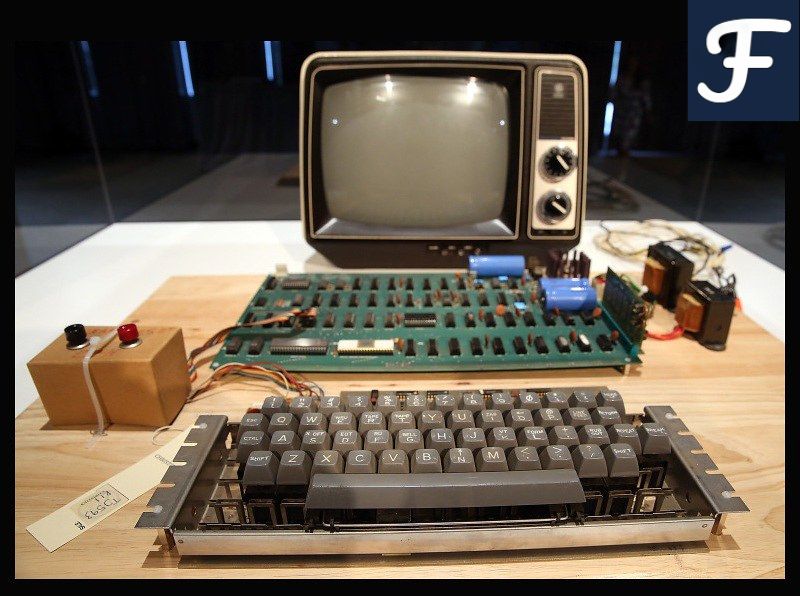
Apple 1 Build
It’s difficult to build a PC from scratch, let alone an Apple 1. Building one from scratch is daunting, considering the scarcity and steep price of authentic Apple 1 computers.
Challenges And Sourcing Parts
A significant challenge was acquiring the required components. Numerous parts utilized in the Apple 1 have ceased production, rendering them both hard to locate and costly to obtain, including the 6502 microprocessor, which serves as the core of the computer.
Build Process
The assembly process proved to be exceptionally labor-intensive and challenging. Attaching over a hundred components to the circuit board was a meticulous endeavor demanding a keen eye for detail. Numerous hurdles, such as misplacing components and making soldering mistakes, existed.
Testing And Troubleshooting
After the physical assembly of the computer was complete, the true test commenced: testing and troubleshooting by powering the motherboard, monitoring the voltage levels, and ensuring there was video output. Yet, getting the computer to boot and execute software turned out to be significantly more challenging, requiring endless hours of meticulous debugging and adjustments.
Community-Driven
Relying on the online community of Apple 1 aficionados. The forums and digital resources proved indispensable for resolving challenges and sourcing hard-to-find parts. The camaraderie and the wealth of shared expertise within this group can ensure the build’s success if you decide to build one from scratch.
Building an Apple 1 computer from the ground up is profoundly difficult. We must respect the brilliance of the original creators and the subsequent technological progress that has emerged.
Note: This section was not meant to give detailed instructions on how to build an Apple 1 from scratch. Rather, it was meant to give you an idea only of how to build one. As I have said, building a PC, or Apple 1, for that matter, from scratch is incredibly difficult.
Engineering Challenges And Innovative Solutions
The development of the Apple 1 was an impressive feat of engineering. During a time when computers were large, energy-intensive mainframes, the goal of crafting a small, cost-effective machine was no small undertaking. The creators faced significant obstacles related to the existing microprocessor technology, memory limitations, and energy efficiency. They embraced creative design strategies to tackle these challenges, fine-tuning each element to enhance performance while keeping expenses low.
Integrating a fundamental video display directly onto the motherboard was a significant step forward in computer design. This innovation removed the necessity for an external video terminal, which was a standard feature and a costly part of early computing systems. Although this method came with certain restrictions regarding graphics performance, it greatly simplified the overall system architecture and lowered the cost for consumers.
Impact On The Home Computing Market
Although Apple 1 may not have been a massive commercial success, it transformed home computing. Providing a reasonably priced and user-friendly computer opened the door for many people to explore the possibilities of personal computing. Although the device had shortcomings, it clearly showcased the practicality of integrating computing technology into households and small enterprises.
The Apple 1 was a groundbreaking machine that cultivated a vibrant community of early tech enthusiasts who eagerly tinkered with its capabilities, creating various software and hardware enhancements. This spirit of grassroots innovation assists in the evolution of the personal computer sector, ultimately paving the way for the more accessible and successful Apple 2, which would capture the hearts and minds of many users.
Looking back, the Apple 1 symbolizes innovative drive and technical skill. It marks a significant milestone in the evolution from bulky, institutional computers to the personal computing revolution that reshaped our world.
Technical Aspects
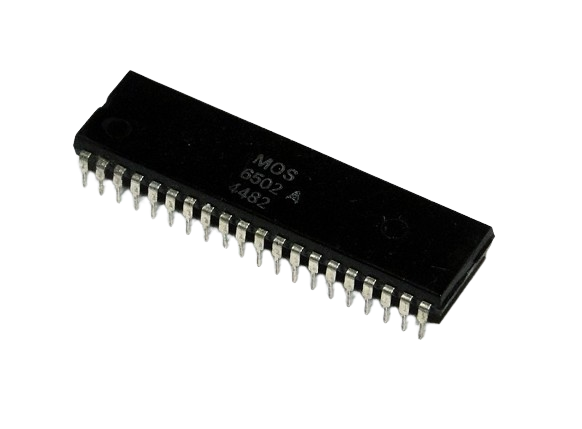
MOS 6502A Microprocessor Image By Wikimedia Commons, License.
Apple 1 transcended the definition of a mere computer; it symbolized groundbreaking engineering in a fledgling industry. Although its technical features may seem basic by contemporary standards, they marked a pivotal advancement in personal computing.
Central to the Apple 1 was the 6502 microprocessor, a chip celebrated for its efficiency and adaptability. Operating at 1 MHz, this 8-bit processor delivered the necessary computational power for the device. Alongside 4 kilobytes of dynamic RAM (DRAM), which was costly and needed regular refreshing, the Apple 1 provided a simple yet effective computing experience.
A standout characteristic of Apple 1 was its built-in video circuitry, a feature that set it apart from many of its peers at the time, which typically relied on external video terminals. The Apple 1 produced a text-based display directly from the motherboard, a groundbreaking advancement that not only cut costs but also streamlined the overall system design.
However, this innovation came with its own set of drawbacks, particularly in terms of graphics performance. The computer’s input and output system was quite simple, allowing users to connect via a keyboard—often a modified typewriter model—and a television adapted to show the computer’s output. While expansion options were somewhat restricted, the presence of an edge connector did provide users with a limited opportunity for customization.
Although these specifications might appear rudimentary compared to today’s technology, they marked a significant leap forward in personal computing at the time. Apple 1’s design approach prioritized ease of use, cost-effectiveness, and widespread availability, establishing it as a revolutionary product.
Impact On Subsequent Computer Designs
Though considered basic by modern criteria, Apple 1 laid the groundwork for the personal computer revolution. Its emphasis on straightforwardness and lower cost set a precedent that would inspire countless computer engineers in the future.
A pivotal effect of the Apple 1 was broadening access to computing technology. Demonstrating that computers could be within reach for individuals and small enterprises ignited creativity and rivalry in the tech industry. The triumph of the Apple 1 and its successor, the Apple 2, helped make personal computers a common fixture in homes.
The Apple 1’s sleek and simple design, prioritizing only the most necessary components, set a precedent for future computer architectures. This innovative approach of consolidating essential functions onto a single circuit board became a widely adopted standard in the tech industry.
Although today’s computers are far more intricate, Apple’s foundational ideas of streamlined design and cost efficiency still resonate throughout the sector. Additionally, Apple 1’s focus on making technology accessible to users, albeit basic by current benchmarks, established the early framework for the human-computer interaction models that would evolve in later personal computers.
Even though Apple 1’s command-line interface may appear outdated now, it marked a significant improvement over the complicated and obscure operating systems used in mainframe computers.
Influence On The Software Ecosystem
The Apple 1, celebrated for its groundbreaking hardware, also left a significant mark on the software ecosystem. Its open architecture inspired a dynamic community of enthusiasts and developers to create software tailored for the device. Although the Apple 1 came with very limited software capabilities, its capacity for growth was clear.
The absence of a pre-installed operating system compelled early users to engage with the machine on a fundamental level, crafting assembly language programs to execute simple functions. This not only deepened their comprehension of computer architecture and programming but also set the stage for the evolution of more advanced programming languages and operating systems.
Despite its modest success, the Apple 1 played a part in establishing a market for personal computer software. As more individuals began to acquire these early computers, a growing need for applications became apparent. This burgeoning demand ignited the formation of software companies and attracted developers, nurturing an environment that would eventually blossom into the robust software industry we recognize today.
Essentially, it served as a spark for software innovation; its inherent limitations pushed programmers to think outside the box and devise creative solutions tailored to the needs of early computer users. Although the device may appear rudimentary by contemporary standards, its influence on the trajectory of software development is irrefutable.
User Interfaces
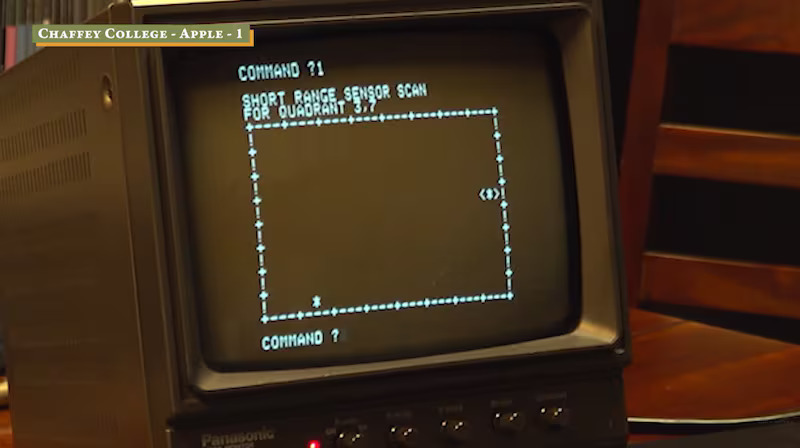
Basic Apple 1 UI, Image By Chaffey College.
Although its command-line interface may have had constraints, these limitations shaped the development of more accessible user interfaces. Using a computer through obscure commands underscored the necessity for more intuitive ways to interact with technology.
Although Apple 1’s text-based output was basic, it highlighted the significance of presenting information clearly and straightforwardly. This emphasis on textual clarity set the stage for future typography and screen design innovations.

Apple 1 With Steve “Woz” Wozniak Showing On The Screen, Image By Chaffey College.
The difficulties faced when using a keyboard to communicate with the machine inspired the creation of keyboard shortcuts and command frameworks that would eventually become fundamental elements of user interface design.
The limitations of the Apple 1 highlighted the emerging need for graphical interfaces, revealing a clear desire for a more visual and interactive computing experience, even though the technology to support such interfaces was still in its early stages. This period marked the beginning of concepts that would evolve into the graphical user interfaces (GUIs) we know today.

Apple 1 With Steve Jobs Showing On The Screen, Image By Auction Team Breker.
The simplicity of Apple 1 compelled users to investigate the fundamental workings of computers, fostering a hands-on approach that inspired a generation of users and developers to pursue more intuitive and accessible interfaces. The obstacles posed by it paved the way for the graphical interfaces that are now an integral part of modern computing.
Legacy Of Apple 1
In this section, I will briefly discuss the legacy of Apple 1. Apple’s significance in computing is irrefutable. It catalyzed the personal computer revolution, proving that computers could be both accessible and affordable for everyday users. The innovative design and engineering principles embodied in Apple 1 still resonate in today’s computer architecture and development, leaving a lasting legacy that continues to shape the industry.
While the Apple 1 did not achieve the same commercial success as its successor, the Apple 2, its importance as a technological landmark is undeniable. This early computer marked a crucial turning point in the development of computing, sparking the creativity of numerous innovators and establishing the groundwork for the digital era we experience today.
Featured Image By Wikimedia Commons (Enhance Image, Added BG Color), License.