



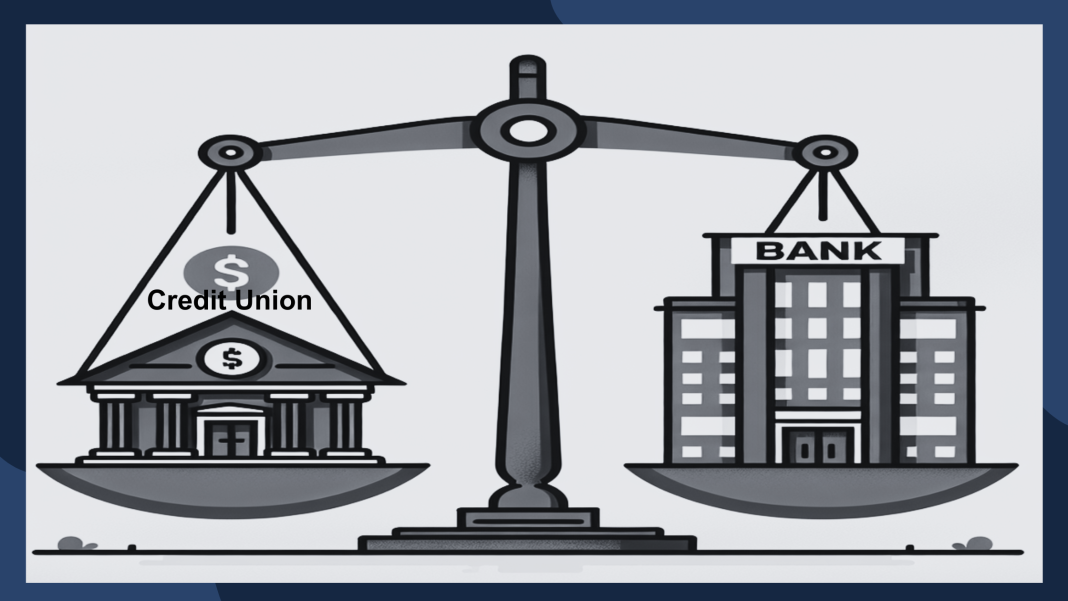
When deciding where to stash your cash, the choice often comes down to credit unions vs traditional banks. It’s like picking between a bespoke boutique and a department store for your financial needs; each offers its own perks. Understanding the nuances between the two can lead to smarter banking choices tailored to your lifestyle. So, let’s dive into the heart of the matter, exploring what sets them apart and how those differences can influence where you might want to park your hard-earned money.
Imagine a financial institution that’s a bit like a close-knit community, where everyone who banks there is a customer, a member, and an owner. That’s essentially what a Credit Union is. Unlike traditional banks, credit unions are not-for-profit organizations. This means they’re more about serving their members than maximizing profits. Think of it as a financial family focusing on providing better rates, lower fees, and a more personal customer service experience.
Membership is usually based on specific affiliations, such as where you live, work, or even places you’re associated with—like a church or school. So, when you join a credit union, you’re not just opening an account but becoming part of a community with your financial well-being at heart.
A traditional bank is much like that one-stop shop you frequent for everyday needs. Picture this: a comprehensive financial supermarket offering everything from savings and checking accounts to loans, credit cards, and investment services. These institutions are for-profit entities, meaning they’re in the business to make money. Governed by shareholders looking to see investment returns, traditional banks often cater to a broad audience, providing services to individuals and companies alike.
What sets traditional banks apart is their extensive reach. They usually boast a vast network of branches and ATMs, making access to your money pretty convenient, no matter where you’re located. Plus, with the rise of digital banking, they’ve expanded their presence online, offering mobile and online banking services that allow you to manage your finances with just a few clicks. Traditional banks blend longstanding financial practices with modern convenience to serve the broadest possible spectrum of financial needs.
Differences Between Credit Unions vs Traditional Banks
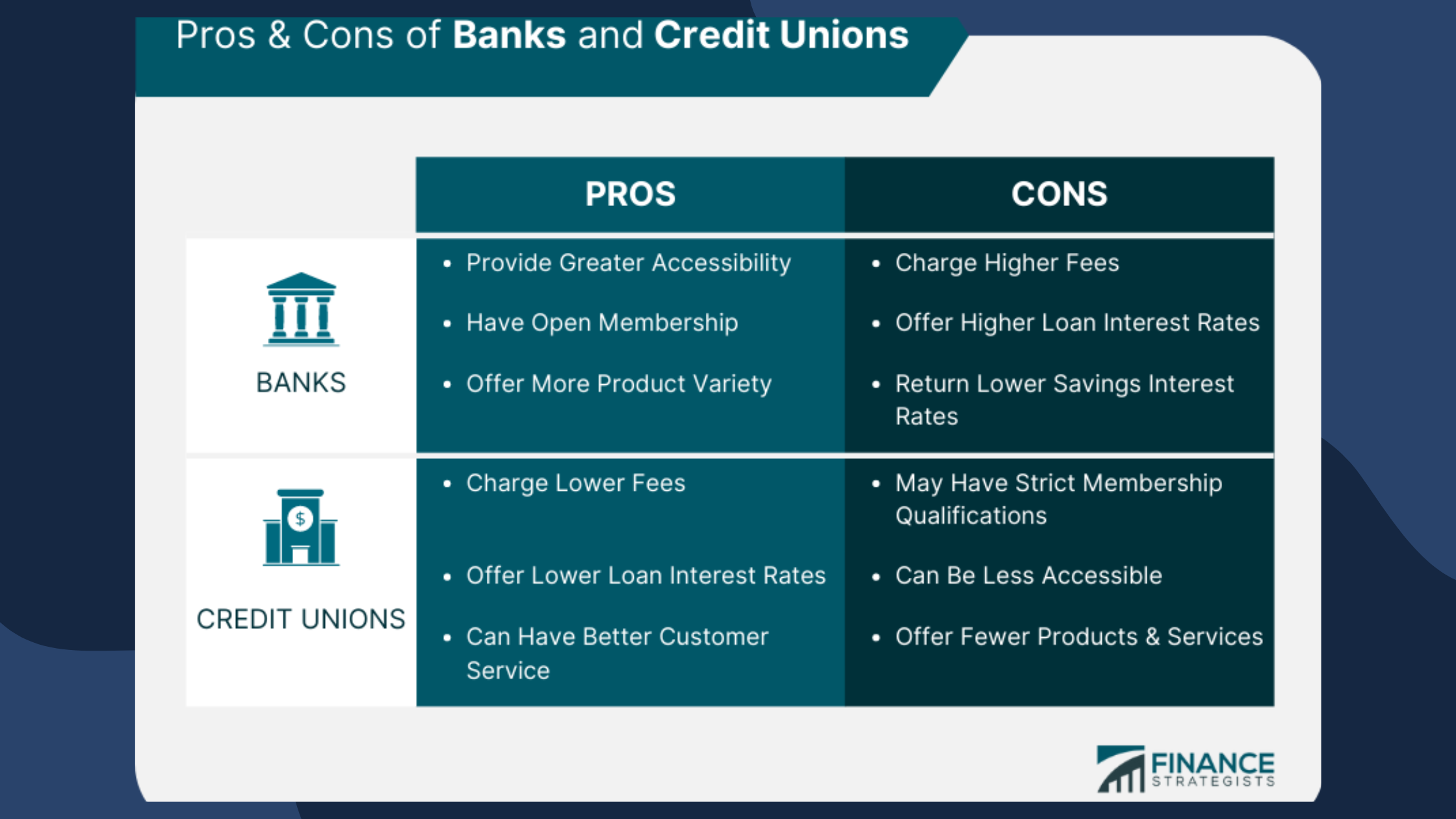

When distinguishing between a credit union and a traditional bank, imagine a guide on the road: both lead to your financial destiny, but their paths are quite different.
First, credit unions consider them financial family gatherings where profits are returned to members through lower loan rates, higher savings rates, and fewer fees. It’s like having and eating your cake but in the banking world.
On the flip side, traditional banks are the big players in the financial industry, operating on a for-profit basis. Here, profits are crucial and often go to shareholders, not necessarily the bank’s customers. While you might get a more extensive range of services and technologies, you might also face higher fees and loan rates. It’s like paying for a premium concert ticket; you enjoy the show (services) but at a higher price.
So, the core difference? It’s all about the mission and the profit distribution. Credit unions focus on member benefits, while traditional banks focus on shareholder profits. Choosing between them depends on what you value more: community-focused benefits or a wide range of services.
Choosing a Credit Union
Opting for a credit union feels like joining a close-knit community where your financial well-being is prioritized. Picture this: instead of just another account number, you’re part of a cooperative that knows your name. Why else might you lean towards a credit union? It is the personal touch. They often provide more tailored, friendly service because they’re smaller and community-focused.
Then there’s the cost-saving aspect. Generally, credit unions offer lower fees and better rates on loans and savings accounts because they’re nonprofit — their main goal is to serve members, not make money off them. Imagine paying less on your car loan or earning more on your savings. That’s the credit union difference. Plus, they’re known for education and advice, helping you make intelligent financial decisions. It’s like having a financial guide by your side.
Choosing a Traditional Bank
Opting for a traditional bank comes with its own set of perks. For starters, accessibility is a significant plus. With branches and ATMs peppered across cities and even small towns, getting in-person assistance or withdrawing cash is typically hassle-free. Plus, if you value a wide array of financial services under one roof – from loans to investment advice – traditional banks often have a more comprehensive suite of options than credit unions. Additionally, their digital platforms are usually quite robust, offering user-friendly apps and online banking services that make managing your finances a breeze anytime. If convenience, accessibility, and a broad spectrum of services are high on your list, traditional banks might be up your alley.
What To Consider?
Deciding between a credit union and a traditional bank can be like choosing between a cozy local café and a well-known coffee chain. Both have their appeal, but your final decision boils down to what you value most in your banking experience.
Think about the customer service aspect. Credit unions are renowned for their community feel and personalized service. If you enjoy having a more intimate banking relationship where staff might remember your name, a credit union could be the way to go.
On the other hand, if you value convenience above all, traditional banks usually have more branches, ATMs, and advanced online banking options. They’re the Starbucks of the banking world – you can find one almost anywhere you go.
Fees and rates are another critical factor. Due to their not-for-profit nature, credit unions often have lower fees and better rates on loans and savings accounts. However, a traditional bank might offer more options if you want a broader range of financial products and services.
Ultimately, your choice between a credit union and a traditional bank will hinge on what you prioritize in your financial management – the personalized, community-oriented approach of credit unions or the widespread, comprehensive services of traditional banks.
Consider what matters most when deciding between a credit union and a traditional bank. Here’s a quick checklist:
Location And Convenience: How important is having a branch nearby? Credit unions may have fewer locations, but don't forget about their ATM networks.


Service And Community Feel: Desire a more personal touch? Credit unions often excel here.
Products And Services: Looking for a wide array of financial products? Banks usually have more to offer.
Rates And Fees: Credit unions often offer better rates on savings and loans, but banks might offer more rewards programs.
Online And Mobile Banking: If you prefer digital banking, compare each institution's apps and online platforms.
Weigh these factors based on your personal banking habits and priorities. Your choice should align with what will benefit you most in the long run.
Choosing between a credit union and a traditional bank depends on your financial needs and preferences. Credit unions offer a more community-centric approach with potential financial benefits for members, while traditional banks provide a broad range of services with widespread accessibility. Both have merits and drawbacks. Ultimately, the best choice is the one that aligns with your financial goals and lifestyle. Whether you value a credit union’s personalized service or a traditional bank’s extensive services, being informed will help you navigate your financial journey confidently.


