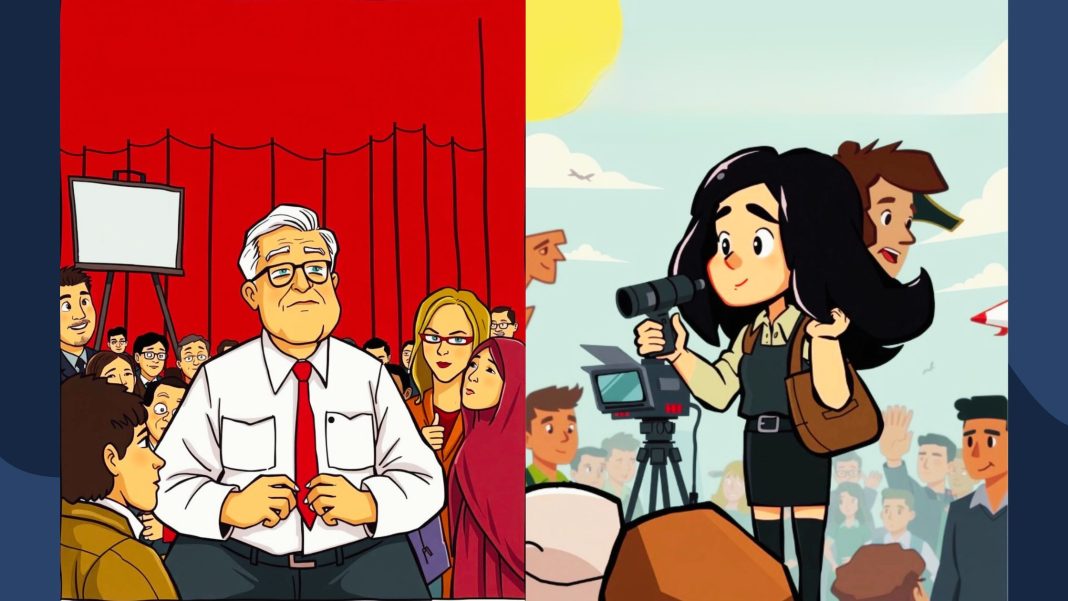
In a world where media shapes minds, documentary films are potent avenues that provoke thought and inspire action. They are significant in influencing political and social discourse. Uncover the transformative power of documentaries as they invite new perspectives, catalyze change, and redefine the narrative of history.
Invite New Perspectives On Historical Violence
Documentaries can invite new perspectives on the possibility of witnessing and representation in the face of historical violence. One of the most unsettling documentaries of recent years, “The Act of Killing” (2012), directed by Joshua Oppenheimer, is a groundbreaking work that explores the harrowing impunity of state-sanctioned violence. The movie focuses on the Indonesian genocide of 1965-66, where over a million alleged communists were killed.
Rather than relying on traditional interviews, Oppenheimer employs a unique approach, inviting former death squad leaders to reenact their crimes in the cinematic styles they admire. Few documentaries actively solicit participation from criminals themselves. However, Oppenheimer’s surreal and unsettling method forces both the perpetrators and the audience to confront moral rot, at once humanizing evil by giving the killers a platform to boast about their murders while revealing their banality in a profoundly discomfiting manner.

Luke Shipman, Ghostwriter And Founder, The London Ghostwriting Company
Documentaries As Catalysts For Change
In recent years, documentary films have emerged as a potent force in shaping political and social discourse. They illuminate underrepresented issues and call into question mainstream narratives. They lift marginalized voices, promote empathy, and urge public dialogue on important issues. For instance, “13th,” made by Ava DuVernay, showed systemic bias perpetuated by the U.S. prison system, leading to a national dialogue on the need for criminal justice reform.
Documentaries shape public opinion and policy debates by combining facts with compelling storytelling. They are also regular catalysts for activism, galvanizing audiences to call for change. Movies like An Inconvenient Truth not only made the world more aware of climate change but they sparked global movements for environmental action. In today’s polarized environment, documentaries build bridges; they humanize and explore complex issues and facilitate debate. They provoke viewers to confront discomforts and change their minds.

Sam Stone, Co-Host, Breaking Battlegrounds
Catalyze Political And Social Change
Documentaries can catalyze political and social change, providing a deep dive into issues very often ignored by more mainstream media. They amplify underrepresented voices and start conversations that drive real-world change. One of the most influential examples of this was “The Social Dilemma,” which revealed the potential for exploitation of social media. The film sparked worldwide conversations about data privacy, mental health, and tech ccompanies’ethical duties, leading to policy debates and corporate accountability efforts.
As a journalist and podcast host, I see firsthand the way documentaries can sway public opinion. Their text-proofing techniques challenge audiences to question the narratives we tell ourselves, ask for transparency, and participate more fully in awareness and advocacy in the question present, making them tools for awareness and advocacy.

Gabriela Perozo, Podcast Host At Claro y Directo, Claro y Directo
Wrapping Up
Documentary films are a powerful medium for shaping political and social discourse in an era of rapid information cycles and digital noise. These films do more than inform—they inspire action, challenge entrenched narratives, and provide a voice to marginalized communities. Whether exposing systemic injustices, influencing policy discussions, or galvanizing grassroots movements, documentaries undeniably shift public perception and drive real-world change. Their immersive storytelling and in-depth research make complex issues more accessible, fostering a more engaged and informed citizenry.
As media consumption continues to evolve, documentary films shaping public opinion remain as critical as ever. With the rise of streaming platforms and independent filmmaking, these works have greater reach and impact than ever, cutting through political polarization to present raw, unfiltered truths. However, with this influence comes the responsibility to maintain journalistic integrity and fact-based storytelling. In a time when misinformation is rampant, documentary filmmakers have a unique opportunity—and obligation—to uphold rigorous ethical standards while continuing to ignite meaningful conversations that shape our society.