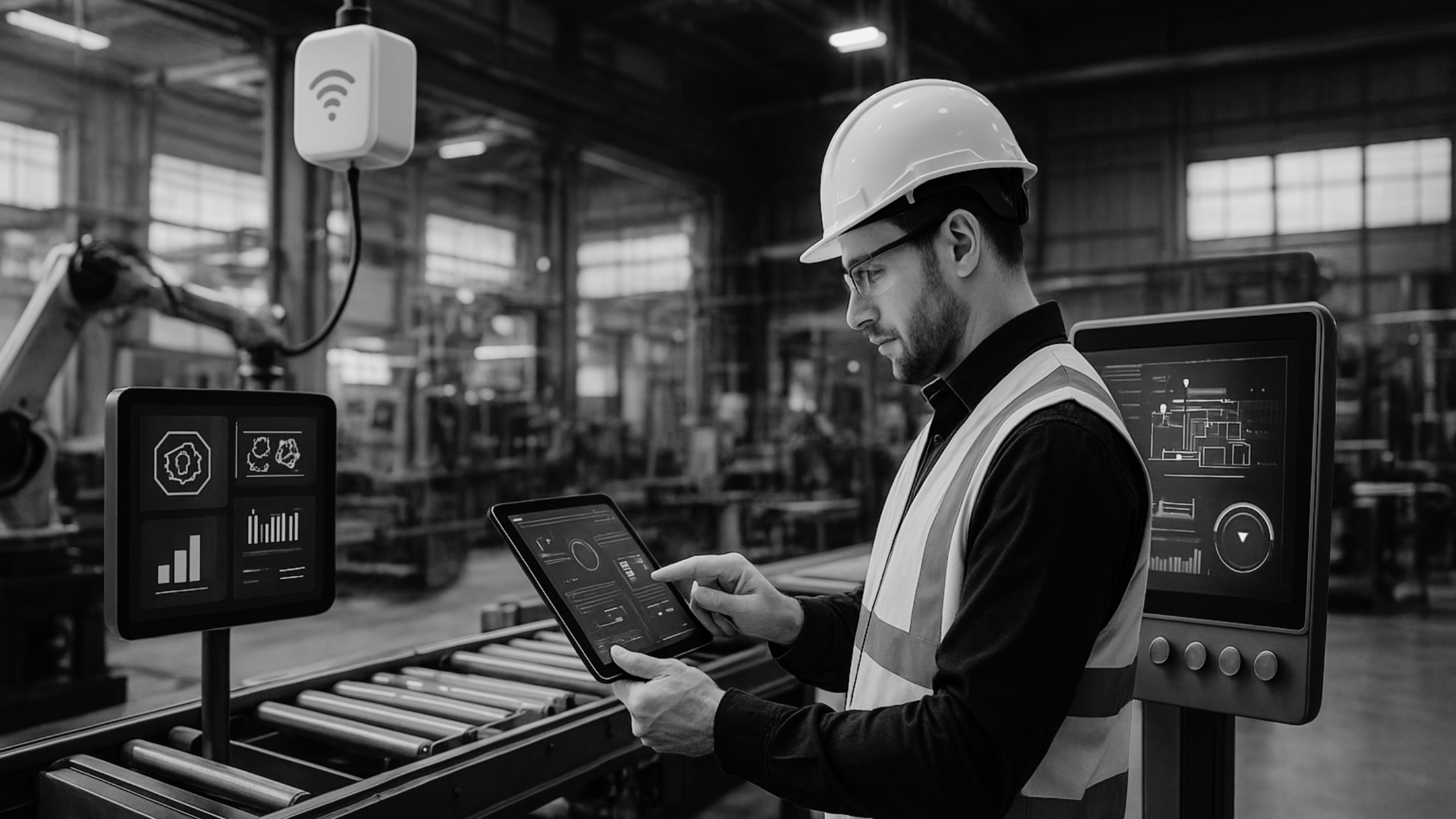
Industrial environments are evolving rapidly, with modern technologies transforming the way workspaces operate. Automation, data analytics, and advanced monitoring systems are helping businesses reduce downtime, minimize human error, and enhance overall safety. From connected sensors to digital twins, these solutions create smarter, safer, and more efficient operations.
TL;DR
Modern industrial technologies—like machine vision, IoT sensors, robotics, and predictive maintenance systems—are revolutionizing workplace efficiency and safety. They help organizations reduce operational risks, automate routine tasks, and establish sustainable production systems that are future-ready.
Essential Technologies Transforming Industrial Workspaces
- Industrial Internet of Things (IIoT): Connects machines and sensors to collect data in real-time, improving predictive maintenance and enhancing equipment uptime.
- Machine Vision Systems: Enable automated inspection and quality control with precision and consistency. Learn more about advancements in machine vision manufacturing.
- Collaborative Robots (Cobots): Work alongside humans safely, handling repetitive or hazardous tasks to reduce workplace injuries.
- Digital Twins: Virtual models of real-world systems that allow engineers to simulate performance and detect potential failures before they happen.
- Wearable Safety Devices: Smart helmets and vests that monitor environmental conditions and worker health, sending alerts for high-risk scenarios.
- Edge Computing: Processes data locally for faster decision-making in time-sensitive industrial applications.
How-To: Implementing Modern Industrial Technologies
- Assess Needs: Identify pain points in your operations, such as safety issues, causes of downtime, or quality inconsistencies.
- Set Clear Objectives: Define measurable goals such as reducing machine downtime by 15% or cutting inspection errors by half.
- Choose Scalable Solutions: Select technologies that integrate easily with existing systems.
- Pilot and Iterate: Test small-scale deployments before rolling out across all facilities.
- Train and Empower Teams: Ensure all staff understand how to operate and maintain new systems safely and effectively.
- Monitor and Improve: Continuously collect data, analyze results, and optimize the system for long-term performance.
Machine Vision And Workspace Modernization
Automated inspection has become a cornerstone of modern industrial environments. Machine vision technologies utilize cameras, sensors, and intelligent algorithms to detect defects, verify product quality, and ensure safety in real-time. These systems can work faster and more accurately than manual checks, dramatically reducing errors and improving throughput. The successful deployment of advancements in machine vision manufacturing relies on reliable, durable computing systems that can withstand harsh industrial conditions while providing the real-time data processing needed for automation and safety.
Benefits At a Glance
| Technology | Primary Benefit | Typical Application | Safety Impact |
| IIoT Sensors | Predictive maintenance | Equipment monitoring | Prevents accidents from equipment failure |
| Machine Vision | Automated quality control | Production lines | Detects defects before escalation |
| Cobots | Human-machine collaboration | Repetitive tasks | Reduces injury from repetitive motion |
| Digital Twins | Simulation & optimization | Plant operations | Identifies hazards before deployment |
| Wearable Tech | Worker safety monitoring | Construction & manufacturing | Detects fatigue, alerts for danger zones |
| Edge Computing | Localized processing | Real-time decision systems | Lowers latency for safety-critical actions |
Practical Tools And Resources
To accelerate modernization:
- Explore Siemens Industrial Edge for real-time analytics.
- Review ABB Robotics for safe automation.
- Leverage Rockwell Automation’s Connected Enterprise for scalable integration.
- Assess Connected Worker Solutions to improve worker protection.
- Study Microsoft Cloud For Manufacturing for digital transformation blueprints.
- Benchmark using Schneider Electric EcoStruxure to track energy and safety efficiency.
- Review PTC’s ThingWorx for building industrial IoT systems.
Industrial Modernization Checklist
Efficiency Goals
☐ Reduce manual inspection times
☐ Improve data-driven maintenance scheduling
☐ Decrease equipment downtime
Safety Goals
☐ Implement real-time hazard detection
☐ Deploy worker tracking and alert systems
☐ Regularly audit automation safety protocols
Sustainability Goals
☐ Monitor energy consumption
☐ Implement predictive optimization
☐ Integrate with ESG reporting tools
Spotlight: Robust Industrial Computing
A less visible yet critical part of modern industrial systems is computing infrastructure. Rugged, fanless computers designed for industrial environments ensure uptime even in high-vibration or extreme temperature conditions. They enable real-time data flow from edge to cloud, ensuring that safety systems, sensors, and machine vision cameras function without interruption. These silent workhorses are what make automation resilient and trustworthy.
Glossary
IIoT (Industrial Internet of Things): A network of connected industrial devices collecting data for analysis and automation.
Digital Twin: A virtual replica of a physical asset or process used for simulation and optimization.
Cobots: Collaborative robots designed to work with humans safely.
Edge Computing: Processing data locally near the source rather than in a remote cloud.
Machine Vision: Use of cameras and algorithms to interpret visual information for automation and quality control.
The modernization of industrial workspaces is no longer optional—it’s essential for competitiveness, efficiency, and safety. By embracing connected systems, predictive analytics, and automation, organizations can build resilient operations prepared for the future of industry. The key lies in selecting scalable and durable technologies that align with both human and environmental goals.