




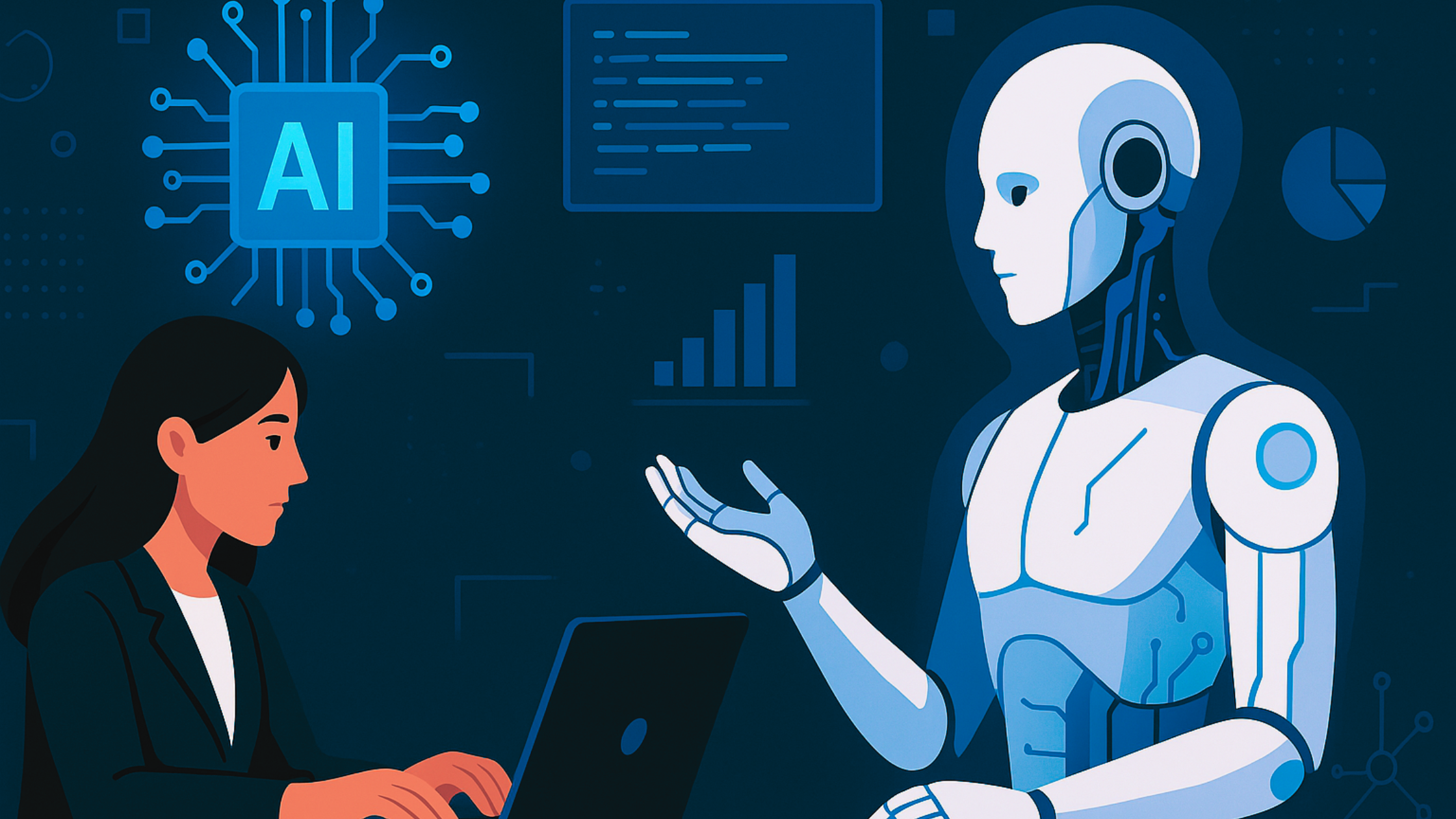
Artificial intelligence has always promised to make machines “smarter.” But the newest evolution in AI isn’t just about smarter models—it’s about independent, goal-driven agents that can plan, act, and adapt. Welcome to the era of Agentic AI, where software doesn’t just respond—it takes initiative. Across the freelance ecosystem, from solo data scientists to large development studios on platforms like Upwork, this shift is transforming what it means to build intelligent systems. The emergence of agent-based architectures, multi-agent orchestration frameworks, and autonomous decision engines is creating a brand-new breed of developer—those who can design, deploy, and manage self-directed AI systems.
What Exactly Is Agentic AI?
Traditional AI systems rely on humans to define every step: they process inputs, return outputs, and await the following prompt. Agentic AI systems, in contrast, are designed to act autonomously toward defined goals. They can reason, break down complex objectives into subtasks, and even interact with APIs, databases, or other AIs to complete missions. Think of them as digital collaborators—entities that combine reasoning with execution. They can manage workflows, analyze evolving data, and adapt their strategies without direct supervision. This makes them invaluable for complex business processes, customer engagement automation, and large-scale data operations.
Why Agentic AI Matters For Businesses?
In a digital economy that prizes speed and adaptability, businesses can no longer afford to treat AI as a static tool. Agentic AI enables scalable, continuous automation across various departments, including marketing, customer service, product analytics, and more. A sales AI agent can autonomously schedule follow-ups, a research agent can summarize and cross-reference thousands of papers overnight, and an operations agent can monitor supply chain disruptions in real time. These are not hypothetical scenarios—they’re early glimpses of how companies are already leveraging agentic frameworks to stay ahead. The key benefit is not just automation—it’s autonomy. An agentic system doesn’t need micro-management; it adapts, learns, and reconfigures itself to optimize performance. That flexibility translates directly into productivity gains and cost efficiency.
How is This Shift Changing Developer Roles?
As organizations adopt more autonomous systems, developer roles are evolving in parallel. Building a chatbot or fine-tuning a neural network is no longer enough. Developers must now design AI that can reason about goals, interact dynamically with its environment, and manage uncertainty. This shift introduces several new technical domains:
- Multi-Agent Orchestration: Managing how independent agents communicate, collaborate, or compete to achieve outcomes.
- Tool Integration: Connecting agent frameworks to external APIs, databases, and third-party tools for action execution.
- Guardrails and Safety Layers: Ensuring agents remain aligned with organizational policies and ethical constraints.
- Prompt Engineering at Scale: Designing dynamic prompts and context windows that adapt to evolving tasks.
- Observation-Action Loops: Enabling agents to evaluate the outcomes of their own actions and improve iteratively.
Developers working in this space must blend machine learning expertise with systems thinking, product strategy, and ethical design.
The Growing Freelance Market For AI Agents
Freelance marketplaces like Upwork have become hotspots for companies experimenting with agent-based systems. Instead of hiring large in-house AI teams, startups and enterprises can now onboard distributed specialists who understand how to design and manage autonomous agents. These projects often demand cross-disciplinary expertise—developers who can combine natural language processing with API design, or a data scientist who can reason about agent coordination strategies. The result is a new wave of freelance opportunities in AI systems architecture, custom tool integration, and multi-agent automation design. Businesses love this flexibility: they can spin up small, agile teams for pilot projects and scale up quickly as results come in. Freelancers benefit, too—they can command higher rates and choose projects at the bleeding edge of AI innovation.
Challenges In Building Agentic Systems
Of course, the path to widespread adoption isn’t without obstacles. Agentic AI introduces fresh challenges around reliability, transparency, and control.
- Autonomy vs. Oversight: The more independent an AI system becomes, the harder it is to predict or constrain its behavior.
- Ethical Design: Agents making autonomous decisions can inadvertently introduce bias or unapproved actions.
- Debugging and Traceability: When agents act based on reasoning chains rather than static rules, debugging errors becomes a new kind of puzzle.
- Security Risks: Malicious actors could exploit open agent frameworks to execute unauthorized commands or extract sensitive data.
Addressing these issues requires robust governance frameworks, simulation testing, and human-in-the-loop designs. Forward-thinking teams are already developing “agentic dashboards” that visualize reasoning paths, execution traces, and confidence levels—ensuring that autonomy never comes at the cost of accountability.
The Skills Developers Need To Thrive
Tomorrow’s most successful AI engineers won’t just be coders—they’ll be architects of autonomy. They’ll understand:
- LangChain, CrewAI, AutoGen, and other orchestration libraries
- Vector databases and retrieval-augmented generation
- LLM prompt strategies and dynamic context injection
- Security and compliance frameworks for AI actions
- Evaluation metrics for reasoning performance
Learning these skills can enable developers to transition from routine automation tasks to high-value projects that shape the future of enterprise AI.
Looking Ahead: The Future Of Work In The Agentic Era
The rise of autonomous systems parallels another global trend—the rise of flexible, distributed work. Just as businesses outsource talent on demand, they’ll soon outsource capabilities on demand through AI agents. Imagine a hybrid team where human freelancers collaborate seamlessly with digital agents. Developers build and maintain these agents; project managers orchestrate mixed human-AI workflows; and clients achieve faster, more cost-effective outcomes without compromising creativity or quality. In this evolving ecosystem, Agentic AI developers will play a pivotal role—bridging the gap between human strategy and machine execution. They’re the ones translating business intent into self-driven, adaptive systems that can operate around the clock.
Building a Smarter, More Autonomous Workforce
We’re standing at the threshold of a significant paradigm shift. The first wave of generative AI showed us that machines can create. The next wave—Agentic AI—will demonstrate that machines can collaborate effectively. For businesses, the opportunity lies in adopting agentic frameworks early and investing in the right expertise. For developers, it’s about mastering the blend of reasoning, autonomy, and control that defines this new frontier. Just as the web created full-stack developers and mobile brought app engineers, the agentic era will create its own specialists. And those who embrace this transformation now will shape the intelligent systems that power the next decade of innovation.


