
Unsure if billboard advertising is still effective in the digital age? Many of us may question billboards’ relevance in a world filled with smartphones, social media, and infinite online content. However, the truth may surprise you. Despite its age-old roots, Billboard advertising has evolved remarkably, playing a significant role in contemporary marketing strategies. Here at Freeduhm, we’ve witnessed how modern billboards have adapted to our fast-paced, technology-driven world, ensuring that billboard effectiveness research remains a crucial component of our overall marketing analysis.
Recent data indicates that billboards are far from outdated; instead, they’ve been transformed to match the dynamic tastes of today’s audience, enhancing their visibility and effectiveness. New, innovative billboards – including digital billboards, murals, transit advertisements, and more – have emerged, reinforcing their indispensability in the marketing mix.
Digital billboards, in particular, have unlocked many opportunities for creative, compelling, and highly targeted advertising, skyrocketing their potential for conversion and ROI. Technological advancements have paved the way for better, more precise ways to measure the impact of billboard advertising, allowing businesses to track conversions and understand user response better than ever before.
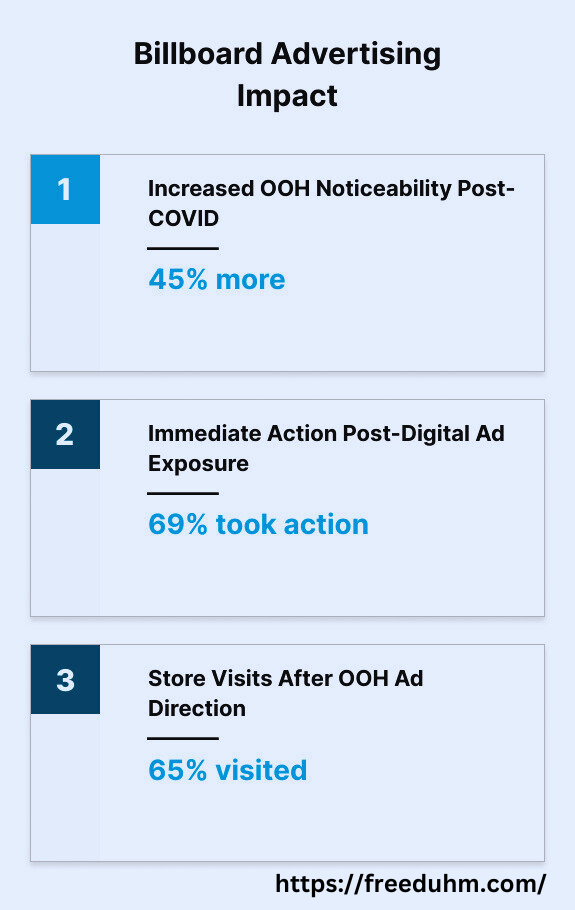
To give you a quick idea of billboards’ effectiveness, here are a few robust statistics:
- 45% of consumers are noticing out-of-home (OOH) marketing materials more than before the COVID-19 pandemic.
- Following exposure to a digital ad, 69% of viewers took an immediate related action: search the brand, visit a physical store, or make a purchase.
- 65% of viewers visited a brick-and-mortar location after an OOH ad directed them there.
As we dive into this guide, we’ll examine the evolution of billboard advertising, uncover the critical aspects that affect their impact, and explore how businesses today can leverage their potential to catalyze success. Let’s discover why – and how – billboard effectiveness research still matters.
Understanding Billboard Effectiveness: An Overview
In today’s digitally driven world, one might assume that traditional forms of advertising, like billboards, have lost their effectiveness. But the reality couldn’t be further from the truth. Research on billboard effectiveness has shown that this classic form of advertising still holds much power in the digital age. Let’s delve into why this is the case.
The Power Of Billboards In The Digital Age
While it’s true that digital marketing is on the rise, billboards continue to be an impactful marketing tool. Their physical presence is unavoidable, unlike ads on digital devices that can be skipped or blocked. According to the Arbitron National In-Car Study, a staggering 71% of Americans consciously look at billboard messages while driving, demonstrating the significant reach and potential influence of billboards.
Moreover, billboards offer a sense of location and relevance that digital ads often struggle to provide. Strategic positioning in high-traffic areas or close to the point of purchase can drive immediate actions and conversions.
How Do Billboards Guarantee An Audience?
The beauty of billboard advertising lies in its ability to guarantee an audience. Unlike other forms of advertising, billboards can’t be ignored, skipped, or turned off. They’re a constant presence in our landscapes, seen by thousands daily.
For instance, in the US, where around 200 million Americans drive along interstates every day, strategically placed billboards can reach millions of individuals, some multiple times a day. This gives billboards a unique advantage in the advertising world.
The Role Of Billboards In Brand Awareness And Status
Billboards play a crucial role in creating brand awareness. They allow businesses to reach a massive audience repeatedly, increasing the chances of brand recognition. They also offer a creative canvas for brands to showcase their personality and values, enhancing brand status.
Research shows that billboards can provoke a consumer response, with the Out of Home Advertising Association of America reporting that out-of-home advertising methods are between 38% and 86% effective at this. This indicates that billboards can significantly influence consumer behavior, making them essential to a comprehensive marketing strategy.
In conclusion, our billboard effectiveness research reveals that billboards are still influential in the digital age. They guarantee an audience, enhance brand awareness, and can influence consumer behavior. In the following sections of our guide, we’ll dive deeper into the metrics and methods for measuring billboard effectiveness and the future of billboard advertising.
Measuring Billboard Effectiveness: Key Metrics And Methods
As we delve deeper into billboard effectiveness research, it’s crucial to understand the metrics and methods used to gauge the performance of a billboard campaign.
Using Audience Impressions, Reach, And Frequency
One of the fundamental ways to measure billboard effectiveness is through audience impressions, reach, and frequency. An audience impression refers to the estimated number of people who see your billboard. Reach indicates the total number of unique individuals exposed to your billboard, and frequency is the average number of times an individual visits your billboard. These metrics are vital in evaluating the breadth and depth of your billboard campaign exposure.
Innovations In Billboard Advertising Measurement And Attribution
In addition to traditional metrics, billboard effectiveness research has seen exciting innovations, particularly in media measurement and attribution. For instance, using unique phone numbers or QR codes on billboards allows us to track incoming calls or scans, attributing these direct interactions to the billboard campaign.
Moreover, geolocation data has emerged as a valuable tool to measure the number of people passing by the billboard location. This data provides insights into traffic patterns, helping to estimate the potential audience reach and the effectiveness of the billboard placement.
Utilizing Smartphone Data, Engagement Surges, And Brand Recognition
With the ubiquity of smartphones, we can now harness smartphone data to measure billboard effectiveness. For example, a surge in website traffic, especially to a specific landing page or unique URL mentioned on the billboard, can indicate successful engagement.
Social media is another powerful tool in our arsenal. Increased social media engagement and brand mentions following a billboard campaign may signal the billboard’s impact on brand awareness.
Lastly, conducting brand recognition surveys can gauge if the billboard increased awareness and recognition of your brand among the target audience. This long-term impact can have lasting brand recall even after the campaign ends.
Billboard advertising is often part of a broader marketing strategy. Analyzing how billboards contribute to the overall marketing mix and complement other channels is crucial. By combining multiple measurement methods, we can gain a comprehensive understanding of the impact of billboard advertising on our overall marketing efforts.
In the following sections of our guide, we’ll look at a study showcasing the effectiveness of billboards in 2023 and discuss the return on investment for billboard advertising.
The Effectiveness Of Billboards In 2023: A Study By Solomon Partners
After understanding the key metrics and methods for measuring billboard advertising, let’s dive into a specific study in 2023 that sheds light on how effective billboards are in today’s digital age. Billboard effectiveness research is essential to make informed decisions about our outdoor advertising strategies.
The High Recall Rate Of Billboard Advertising
A study by Solomon Partners in March 2023 revealed that out-of-home (OOH) advertising, including billboards, has an impressive 86% recall rate. This statistic indicates that most consumers can remember the content of a billboard advertisement after seeing it. That’s a testament to the power of billboards in capturing and holding consumers’ attention.
It’s also worth noting that the high recall rate of billboard advertising can have a long-term impact. A well-designed and strategically placed billboard can leave a lasting impression on consumers, increasing their recognition and recall even after the advertising campaign ends.
Comparing Billboard Advertising To Mobile Advertising
Interestingly, Solomon Partners’ study also compared the recall rate of billboard advertising with that of mobile advertising. The results were quite revealing. While mobile advertising had a respectable recall rate of 57%, it was substantially lower than billboards.
This comparison underscores the unique advantages of billboard advertising. Despite the rise of digital marketing, billboards are a highly effective advertising medium. They can reach a broad audience, capture attention, and leave a lasting impression.
Additionally, the audience is likelier to remember the advertising message displayed on a billboard than on their mobile screens. This can be attributed to large, eye-catching billboards like digital ads that can’t be ignored or skipped.
That said, it’s important to remember that billboard and mobile advertising are not mutually exclusive. Instead, they can complement each other as part of a broader, more comprehensive marketing strategy. At Freeduhm, we believe in integrating traditional and digital advertising to maximize reach and impact.
In the next section of our guide, we’ll delve into the return on investment (ROI) of billboard advertising.
The Return On Investment (ROI) Of Billboard Advertising
Billboard effectiveness research involves understanding how well your message reaches audiences and assessing your campaign’s financial viability. One crucial aspect to consider is the Return on Investment (ROI) of billboard advertising. This metric helps businesses evaluate the profitability of an advertising campaign against its costs.
Factors Influencing The ROI Of a Billboard Campaign
Several factors can impact the ROI of a billboard campaign. Understanding these factors can help optimize billboard campaigns for maximum returns.
Billboard Location: The location of a billboard plays a crucial role in its effectiveness. High-traffic areas typically garner more impressions, which can increase your ROI. However, these prime locations may also have higher rental costs.
Billboard Medium: The medium of the billboard, whether digital or traditional, can also affect the ROI. Digital billboards offer more flexibility, allowing for changes in content and targeted ads during peak traffic times. However, the upfront cost of digital billboards can be higher than traditional billboards.
Circulation and Demographics: Billboard advertising costs are also affected by circulation (number of people exposed to the ad), demographics (age, gender, income level of passersby), and impressions (number of people who notice the ad). Businesses might pay more to advertise to those with higher income levels.
The Benefits And Drawbacks Of Billboard Advertising
As with any advertising medium, billboard advertising has its pros and cons. Understanding these can help you make a more informed decision about whether it is the right choice for your business.
Pros:
- Considerable Exposure: Billboards can target a large audience, increasing brand visibility.
- Cost-Effective Impressions: In terms of impressions, billboard advertising can be cost-effective.
- Location Targeting: Billboard advertising allows for strategic placement in high-traffic areas, targeting specific geographic locations.
- Simple Messages: Billboards are perfect for conveying simple, impactful messages.
Cons:
- Immovability: Unlike digital ads, it stays put once a billboard is up. This lack of flexibility can be a disadvantage.
- Short Exposure Time: People usually pass billboards quickly, reducing the time your message is viewed.
- Measurement Challenges: Measuring the effectiveness of billboard advertising can be more complex than digital advertising, where direct interactions can be tracked.
In conclusion, when used correctly, billboard advertising can be an effective marketing tool. However, businesses must carefully evaluate the potential ROI and consider the various factors influencing it. Stay tuned to Freeduhm for more insights on billboard effectiveness research. Our next section will discuss best practices for effective billboard advertising.
Best Practices For Effective Billboard Advertising
Regarding billboard advertising, it’s not enough to simply put up a big sign and hope for the best. Billboard effectiveness research shows that specific strategies can enhance the impact of your ads and generate a better return on your investment. Let’s delve into some of these best practices.
Choosing Outstanding Locations In High-Traffic Areas
The first rule of real estate applies to billboard advertising, too: location, location, location. The effectiveness of your billboard largely hinges on where it’s placed. Aim to position your billboard in high-traffic areas, such as busy freeway exits or famous subway stops. This guarantees maximum visibility for your ad.
Also, consider your target market. As True Impact Media suggests, consider where your ideal customers live, work, and hang out. For instance, placing your billboard near high-occupancy office buildings or a strip of affordable restaurants and bars could be a good move if you’re targeting middle-class millennials.
Focusing On Branding And Design
Billboard design is a balancing act of creativity and strategic marketing. Your billboard should be visually appealing and convey your brand message clearly and concisely. Commuters have just a few seconds to take in your billboard as they pass by. Use bold fonts, high-contrast colors, and eye-catching visuals to make your message stand out.
Moreover, your billboard should align with your overall branding strategy. Consistency in design, colors, and messaging across all marketing channels helps reinforce brand recognition and trust. So whether it’s a billboard or a social media post, your advertisements should have a consistent look and feel.
Testing Designs With Target Market Feedback
Testing its effectiveness is crucial before you launch your billboard into the wild. Get feedback from your target market. Show them your billboard design and ask questions about the message, design, and call-to-action. This valuable input can help you refine your ad for optimal results.
Testing can also involve a smaller-scale launch of the billboard. Monitor its performance, measure the impact on brand awareness and customer engagement, and be prepared to make adjustments if necessary. As we’ve highlighted in our earlier content, data-driven insights are crucial to optimizing your marketing campaigns.
At Freeduhm, billboard advertising can be a powerful tool in your marketing arsenal. From choosing the right location to crafting an impactful design and continually testing for effectiveness, these best practices can help maximize your billboard’s potential. Stay tuned to Freeduhm for more insights and practical tips on billboard effectiveness research and other digital marketing topics.
The Future Of Billboard Advertising: Technology And Storytelling
As we continue to explore the results of our billboard effectiveness research, it’s crucial to look ahead at the future of billboard advertising. Two key trends shaping its future are integrating technology in out-of-home (OOH) displays and the importance of storytelling in modern advertising.
The Integration Of Technology In Out-Of-Home Displays
Step into the future of billboard advertising, and you’re likely to encounter cutting-edge digital and interactive billboards. These aren’t your traditional static billboards; they are dynamic digital displays that offer greater flexibility, allowing advertisers to change the content in real-time and display multiple ads on rotation.
Our research indicates that digital billboards, like LED billboards, provide businesses with a more dynamic and visible way to advertise. Moreover, the advent of augmented reality (AR) technology allows billboards to overlay digital content onto the physical world, creating interactive and engaging viewer experiences.
We also foresee a rise in programmatic advertising using automated systems to purchase and display ads. This approach allows advertisers to target specific demographics and adjust their campaigns based on real-time data and insights.
Technology integration will continue revolutionizing the billboard industry, making it more engaging, personalized, and effective.
The Importance Of Storytelling In Modern Advertising
As the digital landscape evolves, so does the art of storytelling in advertising. Our billboard effectiveness research shows that creative and compelling storytelling can significantly enhance the impact of a billboard advertisement.
A good story can capture attention, generate interest, and drive action. It’s not just about promoting a product or service anymore; it’s about creating a narrative that resonates with your target audience, evoking emotions, and establishing a deeper connection.
A study found that 58% of billboard viewers learned about an event they were interested in attending or a restaurant they wanted to visit. This illustrates the power of storytelling in billboard advertising to engage viewers and motivate them to take action.
In conclusion, the future of billboard advertising is undoubtedly exciting, with a strong focus on technology and storytelling. As we continue to explore and share insights on billboard effectiveness, we at Freeduhm encourage businesses and advertisers to embrace these trends to gain a competitive edge and better connect with their target audience.
The Continued Relevance And Effectiveness Of Billboard Advertising
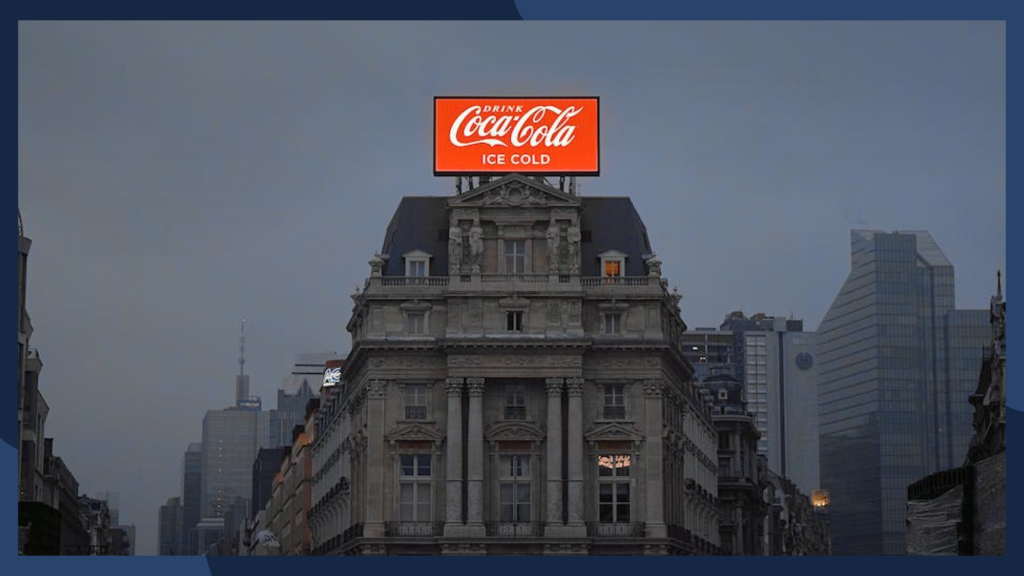
Billboard advertising continues to prove its worth in the digital age, impervious to the rapid changes in advertising technology. Our comprehensive billboard effectiveness research shows that billboards still play a pivotal role in achieving marketing goals despite the surge in digital advertising methods.
Billboards have proven highly effective with their unique ability to reach a large and diverse audience. They are not only eye-catching but also remarkably efficient in provoking consumer response. A 2023 study by Solomon Partners highlighted that out-of-home (OOH) advertising, including billboards, boasts an impressive 86% recall rate. This is significantly higher than the recall rate for mobile advertising, which is 57%.
Furthermore, billboards are strategically placed in high-traffic areas, ensuring maximum visibility and exposure. They continue to serve as a powerful brand awareness tool and generate a high return on investment. With the right location, compelling design, and a clear, concise message, a billboard can leave a lasting impression on its viewers.
The future of billboard advertising holds exciting advancements. Technology integration, such as digital billboards and a growing emphasis on storytelling, transforms how companies use billboards to reach their audience. These new trends are likely to enhance the effectiveness of billboard advertising further, making it a worthwhile investment for businesses of all sizes.
As we conclude, it is essential to remember that billboard advertising is often part of a broader marketing strategy. Understanding how billboards contribute to the overall marketing mix and complement other channels is crucial. By combining multiple measurement methods, businesses can gain a comprehensive understanding of the impact of billboard advertising on their overall marketing efforts.
At Freeduhm, we continue to explore and provide comprehensive insights on various marketing strategies, including billboard advertising. Check out our articles on behavioral marketing and market research tools for a broader perspective on digital marketing trends.
Even in our fast-paced, digital world, billboard advertising remains relevant and practical. As we move into an ever-evolving advertising landscape, billboards stay constant, repeatedly proving their resilience and effectiveness.
The key to successful advertising lies in understanding your audience, delivering a clear message, and choosing the right platform. And for many businesses, that platform continues to be billboard advertising.