

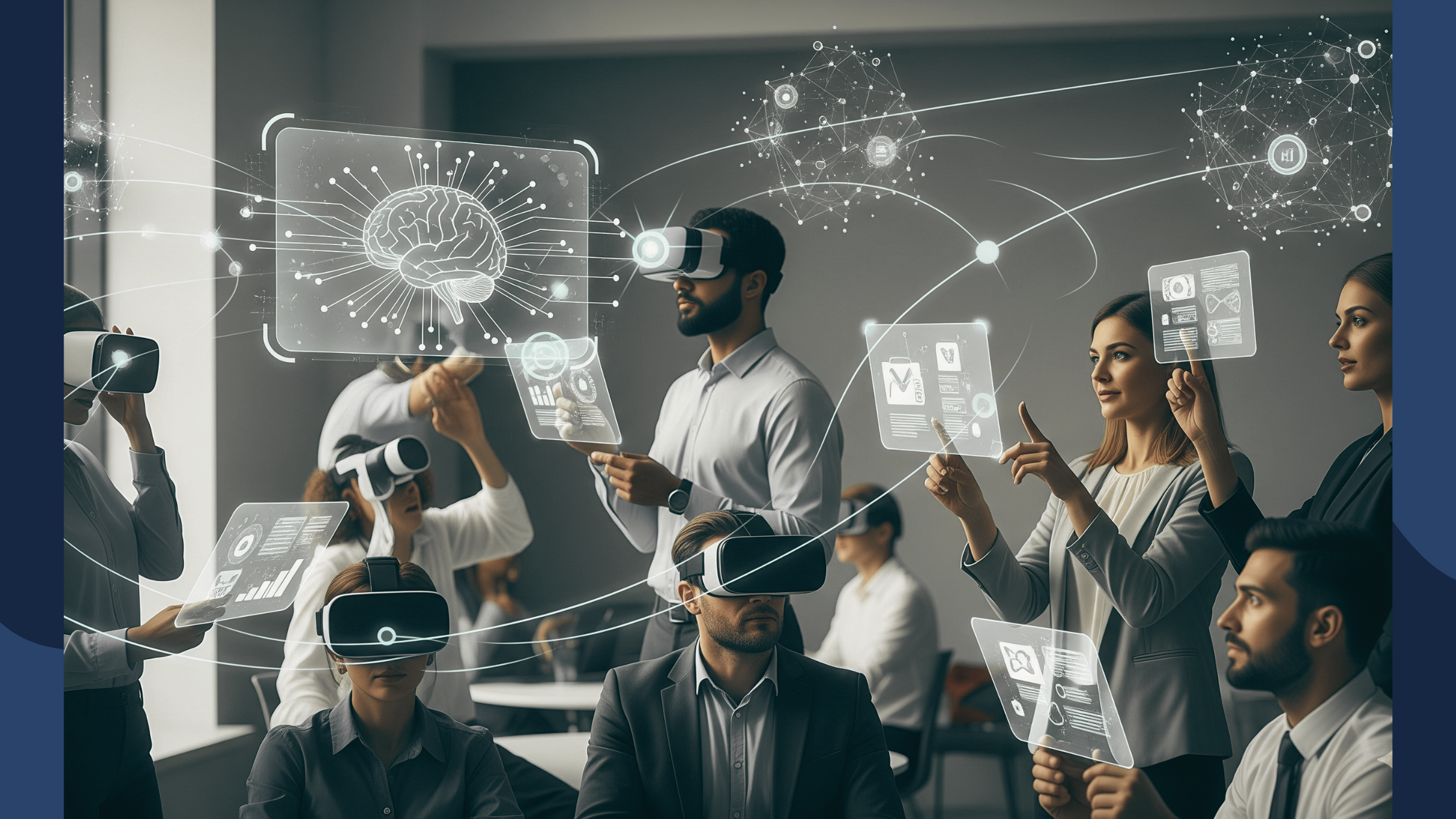
Artificial Intelligence is shaping workplace training, making it more accessible and practical. AI enhances training accessibility. From personalizing learning experiences to breaking down language barriers, AI transforms how companies approach employee development and safety education.
1. AI Personalizes Learning For Individual Needs
When considering AI in workplace training, the word that comes to mind is accessibility. Too often, training programs are built with a “one-size-fits-all” approach—slides, lectures, and perhaps a quiz at the end. However, people don’t learn in the same way. Some absorb information best visually, others through hands-on practice, and others by listening and reflecting. I’ve seen talented employees disengage simply because the format didn’t match their learning style. That’s where AI can truly transform the landscape.
A few years ago, I worked with a client in the healthcare sector with a diverse workforce—some employees with strong technical backgrounds, others who excelled in patient-facing roles but were less comfortable with digital tools. Traditional training was leaving half the room behind. We tested an AI-driven learning platform that adapted in real-time to each participant. For example, if someone struggled with a concept during an assessment, the system would immediately adjust, offering additional video walkthroughs or interactive exercises instead of pushing them forward. For others who grasped concepts quickly, it skipped redundancies and presented more advanced applications.
The impact was evident. Not only did overall comprehension scores improve, but employees also reported feeling less frustrated and more supported. One nurse who had struggled with the earlier training told us she finally felt “the program was written for her, not for some ideal student.” That comment resonated with me—it highlighted how powerful it is when technology personalizes learning to the individual rather than forcing everyone through the same funnel.
From my perspective, AI’s role isn’t to replace trainers or eliminate the human element—it’s to make learning more adaptable and inclusive. By tailoring the pace, format, and depth of content to individual needs, AI helps ensure that no one is left behind simply because they process information differently. In the long run, this doesn’t just create better-trained employees—it builds stronger, more confident teams.

Max Shak, Founder/CEO, nerDigital
2. Adapt Training To Diverse Learning Styles
AI has transformed how we conduct training, and there is no going back. As an HR manager, I know that some of our teammates learn best by watching, others by reading material alone, and the remaining prefer hands-on exercises. After developing the core material manually, I use different suites to adapt it to videos, textbook-like documents, and courses. After informing participants that they have choices, one told me that she was dreading training and did not want to learn in a group since she had problems concentrating. That comment reinforced my commitment to meeting people where they are, rather than forcing conformity. Assuming that the material is solid, AI can work its wonders.

Jeremy Golan SHRM-CP, CPHR, Bachelor Of Management, HR Manager, Virtual HR Hub
3. AI Breaks Language Barriers In Training
Employees with diverse learning styles, linguistic backgrounds, or accessibility needs may be unintentionally disadvantaged by traditional training programs that assume everyone learns similarly. This is where AI offers an advantage. AI allows users to learn at their own pace, in their own style, and according to their needs, making workplace training more accessible.
We once worked with a global client whose employees did not speak English as their first language. Their training courses included an AI-powered learning platform that enabled reading levels to be automatically adjusted, offered real-time translations, and generated audio summaries of text-heavy resources. The employees could decide how they wanted to learn: by reading, watching, or listening. This freedom to choose made the experience easier for everyone, which resulted in a 25% increase in participation rates and a higher retention rate.
We quickly learned that meeting individuals where they are was more important than providing them with identical tools for inclusive training. AI enables us to achieve this on a grand scale by tailoring the content to each learner, resulting in training that is more engaging, applicable, and accessible for all.

Sergio Oliveira, Director Of Development, DesignRush
4. Interactive AI Lessons Boost Employee Confidence
We used AI to make training more inclusive for a teammate with dyslexia. Our onboarding training relied on PDF manuals that were quite difficult for him to complete. Instead of letting him deal with it independently, we used an AI tool to turn the manuals into interactive lessons with short quizzes. Instead of staring at pages of text, he could listen, respond, and review sections at his own pace. It wasn’t just easier for him, but it also made the whole team’s learning more engaging.
What struck me was how quickly the change boosted his confidence. Before, he hesitated to ask questions because he felt he was slowing things down. We noticed that he participated more in group discussions and even started helping newer hires. That experience convinced me that AI isn’t just about efficiency; it can remove barriers people often overlook, giving everyone a fairer chance to grow.

Tony Ragan, President, Absolute Pest Management
5. Translate Safety Instructions With AI Tools
AI promotes training inclusivity through language support. New hires were overwhelmed with the training manuals, as English wasn’t their first language. We used an AI tool to translate our safety instructions into their native language. I recall a technician from Guatemala who told me it was the first time he felt like a company had set him up to succeed, rather than making him figure things out on his own.
This experience really showed me the importance of inclusion in our work. Trust and teamwork are crucial in pest control; everyone must understand safety procedures. Using AI to make our training more accessible helped give everyone the same opportunity to succeed. Watching our team grow more confident proved that inclusion works when we make information easy for everyone to use.

Joel Miller, President, Miller Pest & Termite


