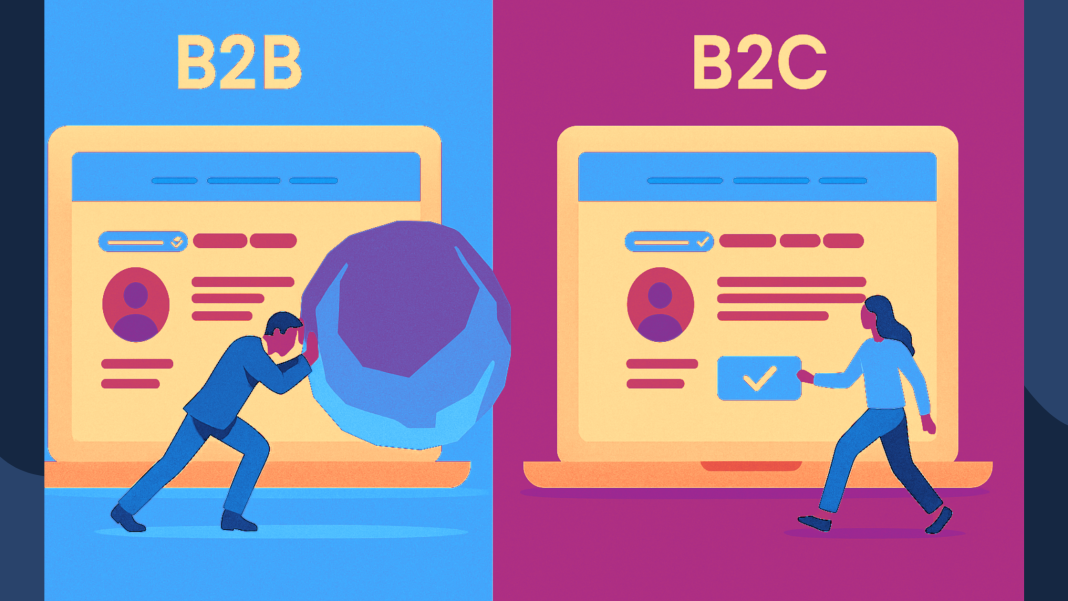
In B2B software, onboarding friction can have far-reaching consequences that surpass those in B2C environments. Find out the critical reasons why seamless onboarding is essential for B2B software providers and why onboarding impacts organizational trust, business accounts, company-wide adoption, and long-term partnerships in this environment.
1. B2B Onboarding Impacts Organizational Trust
Onboarding friction in B2B software is more damaging than in B2C because it disrupts organizational alignment and puts internal advocates at risk. In B2C, a single user might get frustrated and walk away quietly. The impact ends there. But in B2B, one onboarding issue can affect an entire organization. A poor experience does not just impact one person. It risks a company-wide subscription and long-term adoption.
Someone inside the business took ownership of bringing your product in. They secured buy-in, aligned stakeholders, and likely staked their reputation on the implementation. Credibility is lost fast if the onboarding process is slow, confusing, or inconsistent. Other teams begin to question the investment. They revert to old tools. Momentum vanishes, and internal trust erodes.
Poor onboarding introduces doubt. Doubt about the product, the process, and the people behind it. That doubt spreads quickly in B2B environments because success depends on coordination across systems, timelines, and departments. A missed step can delay operations, complicate compliance, or derail integrations.
This is why onboarding in B2B is a strategic priority. It is not just about ease of use. It is about enabling champions, preserving trust, and accelerating time to value. In regulated or high-stakes environments, low-friction onboarding is a competitive advantage. It signals operational maturity and respect for enterprise workflows.
Strong onboarding builds momentum, reinforces internal confidence, and sets the tone for long-term success. It is the first step toward sustainable engagement, renewals, and advocacy. For B2B companies focused on high-impact growth, treating onboarding as a system-wide enabler is essential. It reflects leadership not just in product design but also in how organizations adopt and scale technology.

Raul Reyeszumeta, VP, Product & Design, MarketScale
2. Poor Onboarding Jeopardizes Entire Business Accounts
In B2B software, onboarding friction is more damaging than in B2C because it risks losing not just a user, but an entire team or company account. Unlike B2C, where a single frustrated user might quietly churn, B2B decisions often involve multiple stakeholders. If the onboarding feels confusing, slow, or unsupported, it undermines organizational trust. That can stall adoption, kill internal buy-in, and lead to early churn before value is realized. In B2B, first impressions aren’t just about user experience; they’re business-critical.

Heinz Klemann, Senior Marketing Consultant, BeastBI GmbH
3. B2B Software Onboarding Affects Company-Wide Adoption
Onboarding friction in B2B software carries a far greater cost than in B2C due to business software’s collaborative and often mission-critical nature. When consumers struggle with a new app, they might delete it and try another. However, in a B2B setting, a single disgruntled user due to a confusing onboarding process can quickly ripple through an entire team or department. What’s more, enterprise software often involves a significant financial investment, complex integrations with existing systems, and multiple stakeholders whose workflows depend on successfully adopting the new tool.

Brandon Batchelor, Head Of North American Sales And Strategic Partnerships, ReadyCloud
4. Smooth B2B Onboarding: Crucial For Long-Term Partnerships
Onboarding friction in B2B software causes far more damage than in the B2C environment because the stakes are higher and the user base is smaller but more specialized. In B2B, every delay or confusion can halt entire workflows and frustrate decision-makers who expect quick wins. Unlike B2C, where users might abandon and try another app, B2B clients involve contracts, training, and long-term partnerships. If onboarding stumbles, it risks eroding trust and significantly increasing churn. A smooth start builds confidence and sets the tone for adoption.
Real-time data visibility and AI-driven demand forecasting have been a game changer for smarter warehouse fulfillment. These tools reduce guesswork and keep inventory aligned with actual needs. Automation in picking and packing speeds up orders while minimizing errors. Think of it like turning a chaotic traffic jam into a well-timed symphony. Adapting quickly to shifts in supply or demand means fewer disruptions and happier customers. The key is to blend technology with transparent communication across teams; technology without teamwork is like having a Ferrari stuck in traffic.

Nick Mikhalenkov, SEO Manager, Nine Peaks Media
5. Domino Effect On Entire Teams And Workflows
For me, one unique and often underrated reason why B2B software onboarding friction is more damaging than in B2C is the cascading operational disruption it causes across entire teams. In B2C, onboarding friction typically affects one user at a time; their experience is personal and isolated. But in a B2B context, a complex onboarding process doesn’t just frustrate a single user; it slows down entire departments. When multiple employees are required to adopt a new tool simultaneously, any delay in understanding or using the software can bottleneck workflows, delay deliverables, and impact cross-functional collaboration. The consequences multiply rapidly when several teams depend on a single platform to do their jobs.
B2B purchasing decisions are often driven by ROI and efficiency gains. When onboarding friction leads to slow adoption or disengagement, the perceived value of the software drops, and buyer’s remorse kicks in. This creates internal friction between decision-makers (who approved the spend) and users (who can’t get up to speed), which can threaten renewal rates and long-term client relationships. In this way, poor onboarding in B2B isn’t just a user experience problem. Still, it’s a strategic risk that can undermine business operations and damage the vendor-client trust crucial to long-term SaaS partnerships.